


Our Most Popular Categories
Trending
Health and Social Care
Safeguarding
First Aid
Care Certificate
Food Hygiene
Mental Health
Health and Safety
Animal Care & Training
Business Essentials
Career Bundles
Other Courses

- Yearly Subscription: Unlimited Access to 500+ Courses
- Level 3 Safeguarding Children and Vulnerable Adults
- Level 5 Designated Safeguarding Lead (DSL)
- Care Certificate Course
- Safeguarding Level 4 Training
- Health and Social Care Level 3 Diploma
- Accredited Dog First Aid, CPR and Grooming
- Trauma-Informed Care Training
- Level 3 Safeguarding Children and Vulnerable Adults
- Level 5 Designated Safeguarding Lead (DSL)
- Safeguarding Level 4 Training
- Designated Safeguarding Lead (Level 3 DSL Training)
- Safeguarding Adults Level 3
- Level 2 Safeguarding Children and Vulnerable Adults
- Level 3 Diploma in Nursing Assistant Training
- Safeguarding Adults Training Level 3
- Care Certificate Course
- Mandatory Training For Care Staff and Care Workers
- Level 2 Safeguarding Children and Vulnerable Adults
- Care Planning and Record Keeping in Health and Social Care
- Family Support Worker Training
- Training For Care Workers (Complete Package)
- Care Certificate Standards (1 to 16) + Level 2 And 3 Diploma in Health and Social Care
- Mandatory Training for Care Home Staff Training
- Accredited Dog First Aid, CPR and Grooming
- Pet Nutrition Diploma
- Pet First Aid and CPR Certification
- Pet Care and Psychology Diploma
- Learn to Launch and Grow a Pet Business
- Cat First Aid, CPR and Emergency Care
- Complete Dog Behaviour and Training
- Dog First Aid, CPR & Grooming + Safety for Pet Pros & Owners
- Care Certificate Standards 1-16 (The Complete Bundle)
- Training For Care Workers (Complete Package)
- Care Certificate Standards (1 to 16) + Level 2 And 3 Diploma in Health and Social Care
- Mandatory Training for Care Home Staff Training
- First Aid Essentials 1 to 6 Bundle
- Leadership and Management Courses
- Mandatory and Statutory Trainings For Adult Social Care
- Level 3 Admin PA and Secretarial Diploma Bundle
- Diabetes Awareness Training
- Baby Massage Training
- Employment Law Training
- Learn to Launch and Grow a Pet Business
- Complete Dog Behaviour and Training
- Dog First Aid, CPR & Grooming + Safety for Pet Pros & Owners
- Drugs and Alcohol Awareness Training
- Dog Care, Dog Grooming, and Dog First Aid Course Online

Offer Ends In
Use Code


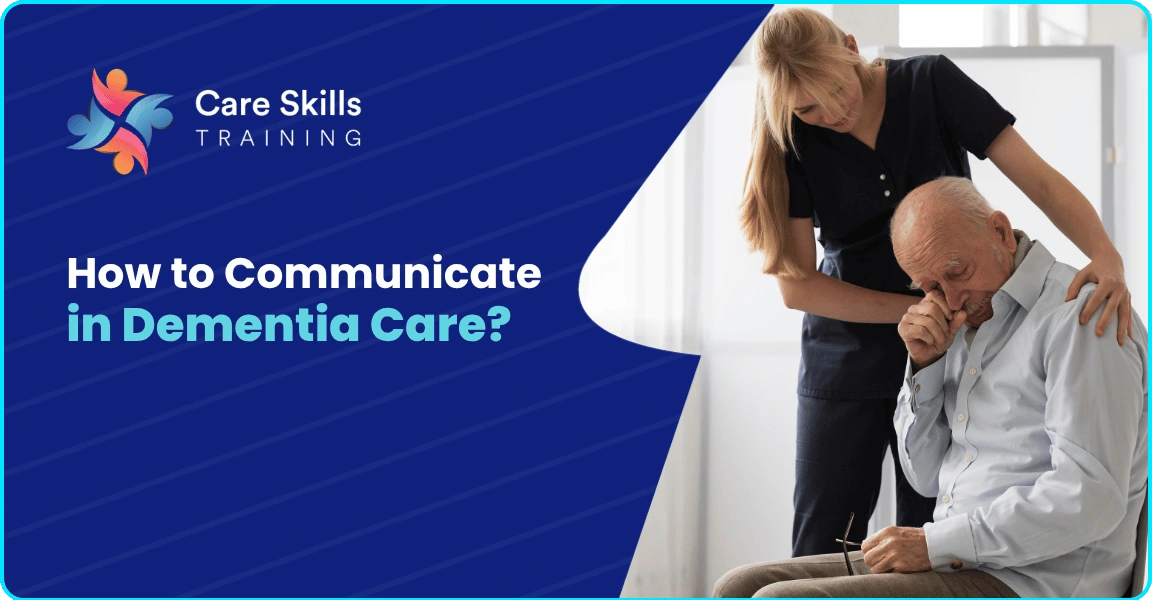
In the UK, almost one million people live with dementia, according to the Alzheimer’s Society. Communication can become difficult as memory loss, language changes and slower processing affect everyday conversations. However, small changes to your approach can make conversations clearer, calmer and more meaningful.
So, how to communicate with someone with dementia? To communicate with someone with dementia, speak clearly, allow time to reply and keep your voice calm. Use natural eye contact, reduce distractions and focus on their feelings rather than correcting every detail.
This blog breaks down proven strategies, from effective dementia communication techniques and common challenges to non-verbal cues. By the end, you will gain confidence and build meaningful connections at every stage.
What is Dementia?

Dementia is a set of symptoms caused by progressive damage to the brain. It can affect memory, clear thinking, speech, daily routines and personal behaviour. These changes can gradually make finding words, expressing feelings and understanding others more difficult.
The condition affects every person differently as brain cells slowly break down over time. A dementia patient might struggle to gather thoughts or follow fast conversations. No two people experience these cognitive changes in quite the same manner.
How Does Dementia Affect Communication?
Dementia affects communication by reducing both the ability to express feelings and to understand others. It leaves someone searching for basic words, getting lost mid-chat, or struggling to get a simple point across. Over time, processing ordinary speech takes far more effort, which regularly brings on deep, exhausting frustration.
As the condition progresses, daily interactions start to look very different. A person might ask the exact same thing repeatedly, lose their thought mid-sentence, or misread a gentle look. Noticing these shifts helps any carer adjust their style, making every chat feel far calmer and far safer.
Common communication difficulties include:
- Forgetting words: A person may struggle to remember familiar words or names.
- Repetition: They ask the same question again, even right after getting an answer.
- Losing focus: Their conversations drop off midway through a sentence.
- Slow processing: Individuals need extra time to take in what you say before replying.
- Non-verbal shifts: Patients rely on gestures or facial cues when words fail them.
How to Communicate With Someone With Dementia?

To communicate well, keep your tone gentle and speak slowly. Sit face to face in a quiet space. Give them plenty of time to reply. Reassure them often during your daily chats. Avoid arguing over small facts. Always focus on building trust, peace, and genuine human connection.
Pay close attention to body posture, gestures, and facial expressions. Non-verbal signals share real feelings when exact words fail. Remaining calm and smiling warmly offers comfort. Listening patiently keeps daily interactions feeling smooth. Protecting their dignity builds professional trust every single day.
Speak Clearly and Slowly
Talk at a steady, unhurried pace using a warm voice. Avoid rushing through sentences or shouting. Rapid talking quickly confuses someone living with dementia. Soft, clear speech makes daily conversations much easier for them to process.
Use Short, Simple Sentences
Keep your phrases short and direct. Stick to one simple idea per sentence. Long, detailed explanations often get confusing. Straightforward statements help the person understand you quickly without feeling strained, tired, or overwhelmed.
Give Them Time to Respond
Pause after speaking so the person can process your words. Resist filling quiet gaps straight away. Pushing for fast replies creates unnecessary stress. Patient pauses give people space to share thoughts in their own time.
Ask One Question at a Time
Ask single, plain questions rather than listing several things together. Piling up questions causes quick frustration. Focus on one simple point at a time. This helps the person reply with far greater ease and confidence.
Offer Simple Choices
Offer just two choices to make everyday decisions easy. For instance, ask if they prefer tea or coffee. Open questions can feel overwhelming. Simple options keep routine tasks manageable and completely stress-free for everyone.
Reduce Background Distractions
Switch off noisy televisions, radios, or loud appliances before talking. A quiet space helps people focus on your voice. Removing background chatter stops competing sounds from pulling their attention away while you are having a conversation.
Maintain Eye Contact and Positive Body Language
Sit at eye level with relaxed shoulders and an open posture. A warm smile and light touch bring quiet reassurance. Friendly visual cues convey kindness, safety, and care long before you finish saying your actual words.
Let Them Finish Their Sentences
Avoid finishing their sentences or jumping in with missing words. Wait patiently while they find the right phrasing. Giving people room to speak stops them from feeling rushed, cut off, or ignored during routine chats
Listen Rather Than Correct
Pay attention to the mood behind their words rather than correcting errors. Validating feelings keeps interactions peaceful. This supportive approach prevents pointless arguments, saving the person from feeling defensive, foolish, or upset during care.
Respect Their Dignity
Talk directly to the individual rather than chatting about them to others nearby. Always use respectful adult tone. Preserving self-esteem protects personal dignity and helps build a strong, trusting bond between carers and residents.


What to Avoid in Dementia Care Communication?
When communicating with someone living with dementia, you need to avoid arguing, correcting forgotten facts, and rushing spoken exchanges. Skip complex open-ended prompts, multi-step instructions, and patronising tone. Never discuss individuals as if they are absent, and refrain from testing memory with unnecessary questions.
Avoiding these common communication triggers stops emotional distress long before it starts. Moving away from bad habits creates a quiet, reassuring atmosphere. This simple shift helps your loved one feel safe, genuinely valued, and deeply respected during every conversation you share together throughout the day.
Avoid using the following phrases when talking to someone with dementia:
- Arguing or correcting: Don’t argue with them, especially “No, That’s Wrong,” as it triggers distress and agitation.
- Testing their memory: Avoid asking “Do you remember…?” or “Do you know who I am?” which causes shame.
- Dismissing repetition: Never say “You already told me that,” as it highlights cognitive decline and damages rapport.
- Demanding logic: Avoid asking “Why did you do that?” because it causes severe confusion and frustration.
- Challenging orientation: Don’t ask “Don’t you recognise this place?” since questioning awareness creates insecurity and fear.
- Using patronising language: Avoid saying “You’re acting like a child,” which harms self-worth and breaches dignity.
How to Handle Common Dementia Communication Challenges?

To handle common dementia communication challenges, you need to stay calm, speak clearly, and adapt to changing needs. Listen patiently to feelings, reduce distractions, and reassure them. Instead of correcting misstatements or forcing recall, validate their emotions and guide conversations with warmth, flexibility, and simple visual cues.
| Communication challenge | How to handle it |
| Repeating questions or statements | Respond calmly and avoid showing frustration. Reassure them if they seem worried or confused. |
| Difficulty finding words | Give the person time to respond. Offer gentle prompts without immediately completing their sentence. |
| Losing track of conversations | Keep conversations short and focused. Gently remind them of the topic when needed. |
| Confusing words or meanings | Focus on the overall message rather than correcting every mistake. Ask simple questions if clarification helps. |
| Becoming frustrated | Stay calm and acknowledge their feelings. Consider changing the subject or taking a short break. |
| Difficulty understanding questions | Use simple language and ask one question at a time. Avoid complicated instructions or multiple choices. |
| Withdrawal from conversations | Create a comfortable environment and discuss familiar interests without putting pressure on them. |
| Aggressive or distressed communication | Remain calm, give them space and look for possible causes such as discomfort, confusion or environmental stress. |
Dementia Communication Tips for Care Workers

Care workers often support people with dementia through conversations, daily routines and personal care. A calm and patient approach can make interactions easier. By understanding individual communication styles, care workers reduce confusion. They build trust and provide more reassuring support.
Specialised professional training equips care staff to manage changing cognitive needs and de-escalate resident distress. Regular skills updates ensure every resident receives consistent support. Team coordination during shift handovers improves care outcomes. Maintaining these structured practices preserves personal dignity.
Here are some useful tips for care workers:
- Complete regular training updates: Participate in ongoing dementia training to learn updated de-escalation strategies and communication methods.
- Practice active listening: Give residents your full attention, acknowledging their words and emotional cues without rushing.
- Coordinate team communication approaches: Share successful communication strategies with colleagues during shift handovers for consistent daily care.
- Use simple, one-step prompts: Break care activities into single, manageable steps to prevent cognitive overload during routines.
- Focus on emotional validation: Apply validation techniques to acknowledge distress rather than attempting to correct confused reality.
- Monitor non-verbal feedback: Observe physical responses during care tasks to gauge resident comfort and adjust immediately.
Frequently Asked Questions (FAQ)
What is the 90-second rule in dementia communication?
The 90-second rule means waiting up to 90 seconds after speaking before expecting a reply. Because dementia slows cognitive processing, giving extra time allows a person to absorb your words, formulate a response, and speak without feeling rushed, anxious, or overwhelmed.
What is the difference between Alzheimer’s and dementia?
Dementia is an umbrella term for a collection of symptoms affecting memory, thinking, and communication skills. Alzheimer’s disease is one specific medical condition and represents the most common cause of dementia, accounting for roughly 60 to 80 per cent of all diagnosed UK cases.
What can make dementia worse quickly?
A sudden worsening in dementia symptoms is usually triggered by underlying physical health issues rather than natural disease progression. Common causes include urinary tract infections, severe pain, sudden environmental changes, dehydration, poor sleep, or acute delirium, all of which require prompt medical evaluation.
Can dementia communication skills be improved through training?
Yes, dementia communication skills significantly improve through structured professional training. Caregivers learn essential validation strategies, effective de-escalation techniques, and non-verbal methods. This specialised education builds confidence, reduces daily caregiver stress, and helps maintain safety, trust, and personal dignity for individuals receiving care.
Conclusion
Learning how to communicate with someone with dementia completely transforms daily interactions into calm moments. Simple, patient habits naturally reduce confusion and make listening far easier. Making these adjustments ensures individuals feel genuinely valued and fully respected every day.
Speak clearly and listen patiently. Always give residents plenty of time to reply. Turning off background noise, offering plain choices, and reassuring feelings makes everyday chats far easier. This simple approach prevents stress and keeps conversation flowing naturally throughout the care home.
For dedicated care workers, consistent communication strengthens personal dignity, mutual trust, and person-centred support. Regular professional training helps care staff respond confidently as communication needs change, ensuring compassionate daily routines.




Level 3 Safeguarding Children and Vulnerable Adults
4.94.9Original price was: £119.00.£29.99Current price is: £29.99.
4499 Students

4 Hours

Level 5 Designated Safeguarding Lead (DSL)
4.94.9Original price was: £199.00.£49.99Current price is: £49.99.
4253 Students
7 Hours
-
3448 Students
17 Hours









0 responses on "How to Communicate With Someone With Dementia? A UK Carer’s Guide"