


Our Most Popular Categories
Trending
Health and Social Care
Safeguarding
First Aid
Care Certificate
Food Hygiene
Mental Health
Health and Safety
Animal Care & Training
Business Essentials
Career Bundles
Other Courses

- Yearly Subscription: Unlimited Access to 500+ Courses
- Level 3 Safeguarding Children and Vulnerable Adults
- Level 5 Designated Safeguarding Lead (DSL)
- Care Certificate Course
- Safeguarding Level 4 Training
- Health and Social Care Level 3 Diploma
- Accredited Dog First Aid, CPR and Grooming
- Trauma-Informed Care Training
- Level 3 Safeguarding Children and Vulnerable Adults
- Level 5 Designated Safeguarding Lead (DSL)
- Safeguarding Level 4 Training
- Designated Safeguarding Lead (Level 3 DSL Training)
- Safeguarding Adults Level 3
- Level 2 Safeguarding Children and Vulnerable Adults
- Level 3 Diploma in Nursing Assistant Training
- Safeguarding Adults Training Level 3
- Care Certificate Course
- Mandatory Training For Care Staff and Care Workers
- Level 2 Safeguarding Children and Vulnerable Adults
- Care Planning and Record Keeping in Health and Social Care
- Family Support Worker Training
- Training For Care Workers (Complete Package)
- Care Certificate Standards (1 to 16) + Level 2 And 3 Diploma in Health and Social Care
- Mandatory Training for Care Home Staff Training
- Accredited Dog First Aid, CPR and Grooming
- Pet Nutrition Diploma
- Pet First Aid and CPR Certification
- Pet Care and Psychology Diploma
- Learn to Launch and Grow a Pet Business
- Cat First Aid, CPR and Emergency Care
- Complete Dog Behaviour and Training
- Dog First Aid, CPR & Grooming + Safety for Pet Pros & Owners
- Care Certificate Standards 1-16 (The Complete Bundle)
- Training For Care Workers (Complete Package)
- Care Certificate Standards (1 to 16) + Level 2 And 3 Diploma in Health and Social Care
- Mandatory Training for Care Home Staff Training
- First Aid Essentials 1 to 6 Bundle
- Leadership and Management Courses
- Mandatory and Statutory Trainings For Adult Social Care
- Level 3 Admin PA and Secretarial Diploma Bundle
- Diabetes Awareness Training
- Baby Massage Training
- Employment Law Training
- Learn to Launch and Grow a Pet Business
- Complete Dog Behaviour and Training
- Dog First Aid, CPR & Grooming + Safety for Pet Pros & Owners
- Drugs and Alcohol Awareness Training
- Dog Care, Dog Grooming, and Dog First Aid Course Online

Offer Ends In
Use Code


To find a job in the UK health and social care industry as a care assistant, it is vital that you have a powerful CV. To do that, you’ll need to understand the key skills for care assistant CV.
An impressive care assistant CV highlights both soft skills and hard skills that are valued by employers in care homes in the UK and in other care environments such as a domiciliary care agency or in the NHS.
This guide aims to assist you in identifying the skills that are most important to include in a care assistant CV, how to emphasise them in your CV and how to write a CV that will stand out from the crowd.
What is Care Assistant CV?
A Care Assistant CV is a document that outlines your work experience, skills, qualifications and achievements in the health and social care industry. This is the initial step to impress employers with your abilities, reliability and compassion.
Unlike CVs for other industries, care employers are not only interested in what you have done, but they are also interested in whether they can trust you to keep people, who are often highly vulnerable, safe, respected and happy.
The skills that you show on your CV for a care assistant position show that you are aware of your role in the care and support of carers, respecting the rights to privacy and dignity, infection control and health and safety and being compassionate and person centred.
In the UK, employers are often searching for CVs that are very specific in meeting the Care Quality Commission (CQC) standards and the skill sets required of the care worker.
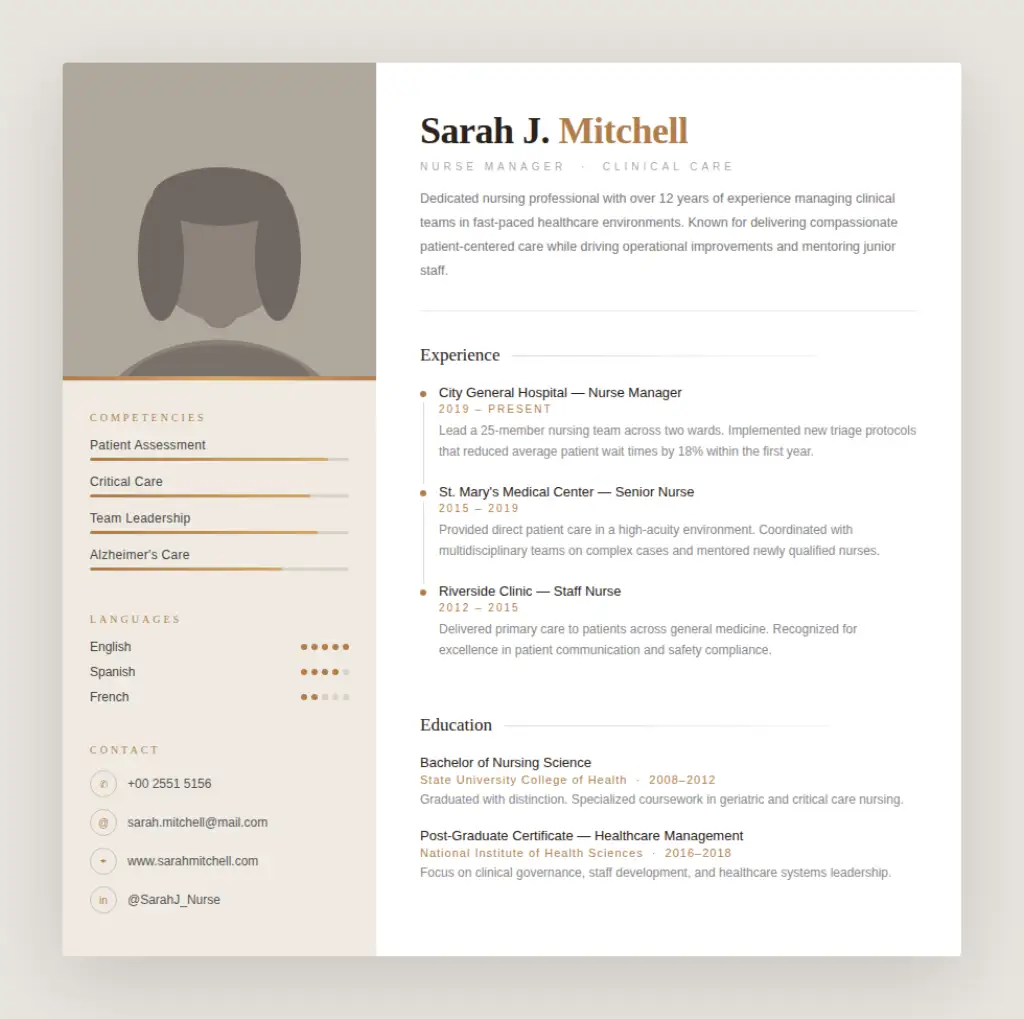
Why Key Skills Matter on a Care Assistant CV?
Care employers receive dozens of care assistant CV templates for each role. What makes yours unique?
It’s not usually the fact that you’ve worked in care before. It’s about showing that you possess the particular skills and qualities that this employer is looking for and giving proof with examples. When preparing for a care assistant role, you must learn about the essentials of how to become a carer in the UK.
Skills demonstrate competence
Care is a responsible role. When you provide specific skills, especially those that are required by the Care Certificate standards, as demanded by CQC regulations or for the job itself, you are showing competence.
Skills show you have invested in your development
Certifications and qualifications such as the Care Certificate, First Aid, or safeguarding training demonstrate your commitment to care work. It means you have invested time and money in developing professionally.
Skills allow employers to visualise you doing the job
Generic CVs make the employer wonder if you can make the job work. A skills-based CV allows employers to visualise you assisting their residents or clients with certain situations, specific tasks, and challenges.
Skills can be matched to job descriptions
When it comes to good care employers, they publish detailed job descriptions stating what skills they are seeking for healthcare. If your CV shows those skills with examples, then you are proving you understand the job and have exactly what they are looking for.
Key Skills for Care Assistant CV
Care assistant employers look for a combination of hard skills and soft skills. This is a balance that the employers will notice that you can provide patient care safely but at the same time, with compassion. Let’s explore both.
Top hard Skills to include on a care assistant CV
Hard skills are skills that can be assessed and measured, such as technical skills. They are usually acquired from training, qualifications or practical experience.
Some of the most in-demand hard skills in the UK care sector include:
1. Personal care and hygiene support: Supporting clients with their personal care and hygiene needs, ensuring that they are clean and comfortable through assisting them with bathing, dressing, and grooming.
2. Medication administration: Medication administration training can help you safely manage and administer medication to clients. You can ensure that they take prescribed medicines at the correct times and in accordance with their health care professionals’ instructions.
3. Moving and handling: Lift and move clients with mobility problems in a safe manner to avoid any harm to the client or any harm to themselves.

4. Infection control: Ensure that high standards of hygiene practices are maintained and that surfaces are sanitised, and that appropriate protective equipment is used to prevent infection.
5. Record keeping and reporting: Accurately document all care given to clients, including any changes in their condition and provide all relevant information to the healthcare team.
6. Nutrition and food preparation: Ensure that the dietary needs of clients are met by preparing meals which are nutritious, take into account their preferences and health needs, and benefit their health.
7. First aid and emergency response: In case of accidents or medical emergencies, emergency first aid training helps you respond effectively. You can also coordinate with medical professionals as needed.
Top soft skills to include on a care assistant CV
Soft skills are personal attributes, human relations skills and emotional intelligence. These are even more important than technical skills in care.
Key soft skills for a UK care assistant include:
- Compassion and Empathy: Good care begins with the foundations of compassion and empathy. Care employers want carers who really care about the wellbeing of the individuals they care for.
- Communication Skills: The ability to communicate with residents, including those with speech problems or hearing difficulties, and with families and colleagues is important.
- Patience: Patience is very much required in caring. Dementia sufferers may ask the same questions over and over. After a stroke, helping with tasks can take much longer time than it does for others. Patience is non-negotiable.
- Reliability and Trustworthiness: Care employers would like to know that you are reliable, turning up for your appointments, following procedures, and being trusted with vulnerable persons and sensitive information.
- Problem-Solving and Adaptability: Care situations are unpredictable. Someone refuses care. Equipment breaks. A resident becomes distressed. It is important to be able to think and problem solve, and to be flexible.
- Teamwork and Collaboration: Care is never a one-man show. You collaborate with nurses, other carers, family, social workers, occupational therapists and many more. It is important to be a good team player.
- Respect and Dignity: Person-centred care is based on respecting people’s choices, dignity, privacy and autonomy.


How to Highlight Skills on your CV?
Simply listing skills isn’t enough. You must be able to demonstrate them in a way that convinces employers that you really do.
Let’s see some of the tips for highlighting skills:
1. Use a dedicated “Key Skills” section
Place this section right at the beginning of your CV so that hiring managers can easily spot the skills you have that are relevant to the role you are applying for. This allows them to easily see your qualifications at a glance and makes you more likely to stand out.
2. Provide examples in your work experience
Don’t simply state what you can do, try to show how you have used those skills in real-life situations. “Provided personal care services for 10 residents each day, preserving their dignity and privacy.” This demonstrates to potential employers your skills and contributions to past employers.
3. Adapt skills to the job description
Thoroughly read the job advertisement for the care assistant role and match your skills. Identify those that fit the specification you have, and show you are not only qualified but you are also thinking of what is required.
4. Combine hard and soft skills
Employers like a combination of work skills and emotional intelligence. Make sure your CV reflects both your hard and soft skills, as it is essential in the care sector to highlight both.
5. Use bullet points
Present skills in a clear and concise manner, using bullet points. This formatting is useful to ensure your CV is easy to read and it will enable employers to quickly glance at your skills and qualifications without becoming lost in a paragraph of text.
Additional Skills That Make Your CV Stand Out
Beyond the standard care skills, including extra competencies can give your CV an edge:
- Digital literacy: Proficiency in using care management software and electronic health records is essential. Knowing these tools will help to improve efficiency in the management of client information and streamline care processes.

- Knowledge of safeguarding: A comprehensive understanding of the Care Quality Commission (CQC) standards is crucial, alongside knowledge of safeguarding procedures. This will help to secure protection for all clients and care in a safe, supportive environment.
- Dementia awareness: Experience or training working with clients who have memory-related issues is beneficial. When caregivers have an understanding of this knowledge, they can offer more individualised care and foster a more understanding and compassionate environment for people living with dementia.
- Mental health support: It is essential to recognise how to support clients who experience anxiety and depression. This includes identifying indicators of mental health concerns and using strategies to foster mental health and resilience.
- Language skills: Communication ability in other languages is a useful skill for a carer. It helps to foster positive interactions with clients of varying backgrounds to better understand their needs and address them accordingly.
Essential Certifications and Qualifications to Mention
You can become a healthcare assistant with no prior experience in the UK. However, certain certifications and qualifications significantly strengthen your CV. Include them in a dedicated section and prominently in your key skills.
Key certifications for a UK care assistant CV include:
The Care Certificate
The Care Certificate is the basic induction training for care workers in the UK. If you have it, say it. If you don’t have them, then you will need to get them, as it is expected of new care workers.


First Aid Certifications
First Aid at Work, Emergency First Aid at Work or Paediatric First Aid. Add them to demonstrate your knowledge in these areas.
Level 3 Diploma in Adult Care
Even more impressive for care assistant roles is the “Level 3 Diploma in Adult Care”. This qualifies you for supervisory roles.
Safeguarding Training
Mention completion of safeguarding training, especially if it’s up to date. This shows your awareness of protection and reporting procedures.
Food Safety
Include if you have formal certification, such as “Food Safety Training Level 2“, rather than just induction training.
Common Mistakes to Avoid When Listing Skills
Even experienced candidates can make mistakes on a CV. While listing skills, keep the following in mind:
| Common Mistake | Example of the Mistake | Better Approach |
| Vague or Generic Claims | Using phrases like “Good at everything” or “Team player” | Use specific examples, such as: “Reliable team member with a strong attendance record, consistently praised for a collaborative approach and willingness to support colleagues.” |
| Unsupported Claims | Listing skills without evidence that you actually possess them | Support skills with relevant work experience, training, qualifications, or certifications. |
| Overstating Your Experience | Claiming advanced knowledge of a skill you have only recently started learning | Be honest about your ability level. For example, use “Developing experience with…” rather than claiming expertise. |
| Listing Skills Without Context | Providing a random list of hard skills without explaining how they were used | Demonstrate how skills were applied in specific roles, tasks, or workplace situations. |
| Forgetting Soft Skills | Focusing only on technical abilities and ignoring interpersonal qualities | Balance hard skills with essential soft skills such as communication, empathy, patience, and teamwork. |
| Not Matching the Job Description | Using the same generic CV for every application | Tailor your skills and examples to align with the requirements of each employer and job role. |
| Outdated Certifications | Including training certificates that expired years ago | List only current and valid certifications, or renew expired qualifications where appropriate. |
| Poor Presentation | The skills section is cluttered, difficult to read, or poorly organised | Use clear headings, bullet points, and consistent formatting to improve readability. |
You can also follow our guide to discover whether care workers in the UK can work in care without a DBS.
FAQs
What are the 5 key skills for a CV?
For a care assistant CV, the five essential skills are:
1. Communication
2. Empathy
3. Moving and handling
4. Time management
5. Teamwork
What are the top 3 qualities of a caregiver?
The top 3 qualities of a caregiver that a UK hiring manager looks for are:
1. Compassion
2. Patience
3. Reliability
Should I include skills from volunteer work?
Absolutely, yes. Volunteer experience providing care, support work, or even general support in care settings is valuable. Employers value volunteer work because it demonstrates commitment to care work before you’ve landed a paid position.
What are the 5 C’s of caregiving?
The 5 C’s of caregiving are a framework for understanding excellent care practice. They are:
1. Care
2. Compassion
3. Competence
4. Communication
5. Commitment

Conclusion
Your care assistant CV should be more than a list of job experiences. Standing out in the UK care sector requires a skill set that includes the appropriate hard skills, soft skills, and any relevant certifications.
By demonstrating competence, emotional intelligence, and key skills for care assistant CV, you will significantly improve your chances of landing interviews and securing the role you want.
Remember to tailor your CV to each job, provide examples of your skills in practice, and include essential qualifications like the Care Certificate and safeguarding training.
When you have a care assistant CV that is well prepared and has the right skills, you will be able to demonstrate to employers that you possess the skills, compassion and professionalism to become a great care assistant.
You can also go through our guide on what a job-ready programme is in the uk for a care assistant role!




Level 3 Safeguarding Children and Vulnerable Adults
4.94.9Original price was: £119.00.£29.99Current price is: £29.99.
4499 Students

4 Hours

Level 5 Designated Safeguarding Lead (DSL)
4.94.9Original price was: £199.00.£49.99Current price is: £49.99.
4253 Students
7 Hours
-
3448 Students
17 Hours









0 responses on "Key Skills for Care Assistant CV: How to Make Your CV Stand Out in the UK?"