


Our Most Popular Categories
Trending
Health and Social Care
Safeguarding
First Aid
Care Certificate
Food Hygiene
Mental Health
Health and Safety
Animal Care & Training
Business Essentials
Career Bundles
Other Courses

- Yearly Subscription: Unlimited Access to 500+ Courses
- Level 3 Safeguarding Children and Vulnerable Adults
- Level 5 Designated Safeguarding Lead (DSL)
- Care Certificate Course
- Safeguarding Level 4 Training
- Health and Social Care Level 3 Diploma
- Accredited Dog First Aid, CPR and Grooming
- Trauma-Informed Care Training
- Level 3 Safeguarding Children and Vulnerable Adults
- Level 5 Designated Safeguarding Lead (DSL)
- Safeguarding Level 4 Training
- Designated Safeguarding Lead (Level 3 DSL Training)
- Safeguarding Adults Level 3
- Level 2 Safeguarding Children and Vulnerable Adults
- Level 3 Diploma in Nursing Assistant Training
- Safeguarding Adults Training Level 3
- Care Certificate Course
- Mandatory Training For Care Staff and Care Workers
- Level 2 Safeguarding Children and Vulnerable Adults
- Care Planning and Record Keeping in Health and Social Care
- Family Support Worker Training
- Training For Care Workers (Complete Package)
- Care Certificate Standards (1 to 16) + Level 2 And 3 Diploma in Health and Social Care
- Mandatory Training for Care Home Staff Training
- Accredited Dog First Aid, CPR and Grooming
- Pet Nutrition Diploma
- Pet First Aid and CPR Certification
- Pet Care and Psychology Diploma
- Learn to Launch and Grow a Pet Business
- Cat First Aid, CPR and Emergency Care
- Complete Dog Behaviour and Training
- Dog First Aid, CPR & Grooming + Safety for Pet Pros & Owners
- Care Certificate Standards 1-16 (The Complete Bundle)
- Training For Care Workers (Complete Package)
- Care Certificate Standards (1 to 16) + Level 2 And 3 Diploma in Health and Social Care
- Mandatory Training for Care Home Staff Training
- First Aid Essentials 1 to 6 Bundle
- Leadership and Management Courses
- Mandatory and Statutory Trainings For Adult Social Care
- Level 3 Admin PA and Secretarial Diploma Bundle
- Diabetes Awareness Training
- Baby Massage Training
- Employment Law Training
- Learn to Launch and Grow a Pet Business
- Complete Dog Behaviour and Training
- Dog First Aid, CPR & Grooming + Safety for Pet Pros & Owners
- Drugs and Alcohol Awareness Training
- Dog Care, Dog Grooming, and Dog First Aid Course Online

Offer Ends In
Use Code


Phlebotomy, a simple skill like blood collection, can open doors to a growing career in the UK healthcare system. Also, the phlebotomist UK salary is promising due to the expected 15% rise in employment of phlebotomists in the UK by 2028.
The phlebotomy starting salary is £20,000 per year. With experience, the salary growth increases. Phlebotomy job pay varies from region to region. You can grow a career in healthcare without a medical degree. It is one of those careers that has safety, flexibility, and, more importantly, a very satisfactory salary.
In this blog, you will learn about a career as a phlebotomist, career progression, and how much you will earn when you become one. Let’s get started.
Who is a phlebotomist?

The word phlebotomist comes from phlebotomy. It is the procedure of withdrawing blood for testing or research purposes. A phlebotomist is the professional who conducts this procedure. Phlebotomists are trained to collect blood samples through the veins. They are also trained to prepare specimens for laboratory analysis.
Phlebotomists have a more significant role than you can see. They are essential members of the healthcare system. They help doctors get the exact results for diagnosing illnesses. Phlebotomists are the first ones whom patients come into contact with. So they have to be both friendly and responsible.
What are the responsibilities of a phlebotomist?
You may think that phlebotomy jobs only have one duty, which is the collection of blood samples. However, in a real-life scenario, a phlebotomist does more than that. They play a significant role in the healthcare system. They manage both technical and emotional balance. The key responsibilities are-
✔ Collecting blood samples from patients using safe and clean methods
✔ Labelling the collected blood samples accurately for testing
✔ Preparing medical equipment like needles, tourniquets, vials, alcohol swabs, gloves, gauze pads, cotton balls, etc
✔ Updating and managing patient data
✔ Following strict infection control and safety protocols
✔ Giving comfort to nervous patients and explaining procedures clearly
✔ Delivering samples to laboratories for analysis
✔ Handling patients for adverse reactions during or after procedures
✔ Assisting with blood donation drives or mobile units
✔ Communicating with doctors, nurses, and lab staff and building a healthy relationship with them


How to become a phlebotomist?
You may think it will be very difficult to become a phlebotomist, but actually, it is easier than you think. So, how do you become a phlebotomist?
If you want to start your career as a phlebotomist, you need to complete an accredited phlebotomist course that covers both theory and hands-on practice in drawing blood. You do not need a university degree.
The best part of this is that phlebotomist employment opportunities are really good in comparison to other jobs. After completing the training, you can apply for an entry-level position in the NHS or any other clinics in the UK. After gathering job experience, you can apply for better opportunities.
Learn more about the job opportunities you will get with a Health and Social Care Diploma in the UK healthcare settings.
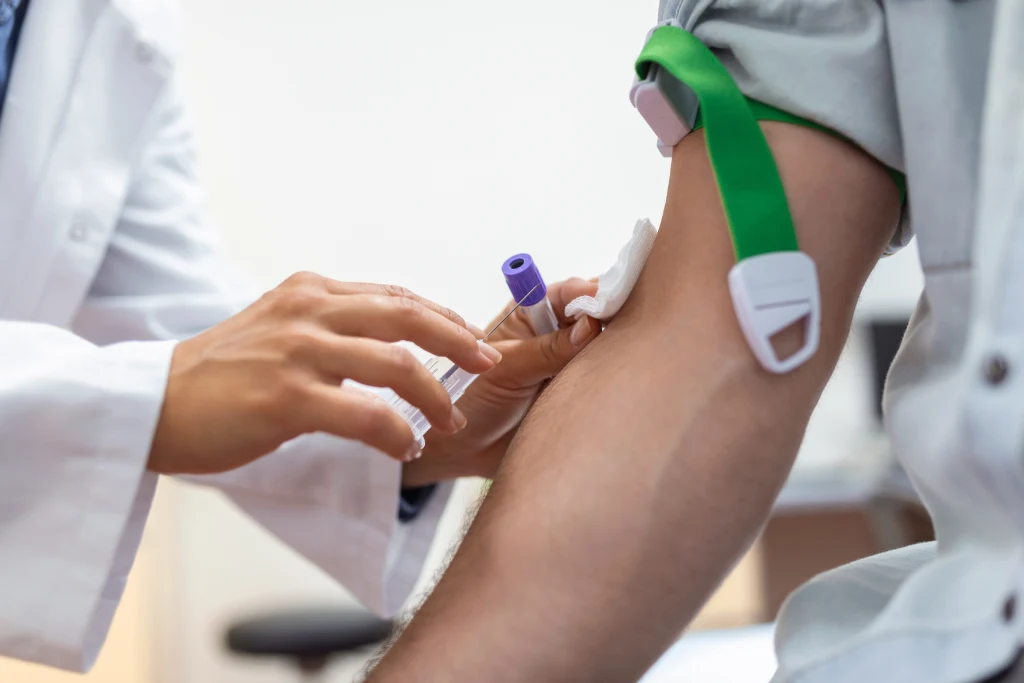
Phlebotomist Qualifications UK
To become a phlebotomist in the UK, a university-level degree is not mandatory. But there are some specific qualifications and skills you need to learn before you start a career as a phlebotomist. The step-by-step requirements are:
🔸Complete high school or equivalent education
To become a phlebotomist, you need to finish your secondary education, GCSE or equivalent. Biology, health, and science provide a helpful foundation for your career.
🔸Enrol in a phlebotomy course
The most important next part is that you are enrolling in a recognised phlebotomy course. You do not require any previous experience to enrol on these courses. Many courses also include practical training or placements in clinical settings.
🔸On-the-job training
This is the first step of your phlebotomy job. Some NHS trusts and private healthcare providers offer trainee phlebotomist roles. You can learn while you work. This can be a direct route into employment.
🔸Various certifications
This is not something that you must have, but a recognised certification can boost your career. Therefore, starting phlebotomy jobs with certificates can make your journey smoother.
🔸Basic IT and record-keeping skills
As we are living in a digital era, all the records and data are preserved in digital form. Therefore, it is recommended that phlebotomists should be familiar with basic IT and the handling of electronic patient records.
Want to know how Care Skills Training can help you become a phlebotomist?
A course that aligns with current industry demand and holds recognised accreditation can be the perfect starting point for a career in the phlebotomy sector.
An ideal phlebotomist training covers essential foundations such as collecting blood with precision, understanding veins, anatomy, blood flow, infection control, and more.
Care Skills Training is a leading platform offering CPD-accredited courses that are regularly updated to meet industry standards. Our Phlebotomist Training Course covers all the foundational knowledge and skills you need to start or take your career to the next level as a phlebotomist.


The course is fully online, offering maximum flexibility without compromising on quality. By enrolling, you’ll gain the vital skills needed to compete in the UK job market.
Phlebotomist UK salary: How much does a phlebotomist make?
The UK phlebotomist salary varies for many reasons. With time and experience, the salary increases. A phlebotomy starting pay of £21,450 per year to £24,000 per year. Also, salaries vary by region. For example, Manchester offers the top rate, £16.19/hour or £33,938 annually, while Cambridge pays closer to £11/hour or £22,991 annually.
The reason behind this variation is living expenses, NHS banding, local trust, demand and competition, agency vs. permanent roles. So, with a lot of benefits, what is the average salary of a phlebotomist? Here is the breakdown –
| Experience Level | Phlebotomist Salary UK(Hourly Rate) | Phlebotomist salary UK(Hourly Rate) |
| Trainee | £19,000 – £21,000 | £10 – £11/hr |
| Junior (1–3 yrs) | £22,000 – £24,000 | £11 – £13/hr |
| Mid-Level (3–5 yrs) | £25,000 – £27,000 | £13 – £15/hr |
| Senior (Band 4 NHS) | £28,000 – £30,000+ | £15 – £18/hr |
| Agency/Locum | Up to £35,000+ | £18 – £20+/hr |
The average salary of a phlebotomist varies due to location. Larger cities pay slightly higher wages due to higher costs.
| City | Phlebotomist Salary UK (Annual Salary Range) | Phlebotomist salary UK(Annual Salary Range) |
London | £12.81 | £26,856 |
Liverpool | £11.21 | £23,496 |
Cambridge | £10.97 | £22,991 |
| Oxford | £11.85 | £24,840 |
Glasgow | £13.56 | £28,411 |
| Brighton | £11.36 | £23,798 |
| Manchester | £16.19 | £33,938 |
Phlebotomist employment opportunities

Phlebotomist employment opportunities are growing rapidly day by day in the UK. Different hospitals, clinics and blood donation firms are hiring phlebotomists. Studies show that, in 2020, the amount of money spent on healthcare increased by 15.7%. Which means phlebotomist employment opportunities are getting higher.
So, how do you become a phlebotomist? Just start by enrolling in a recognised phlebotomist course. After the training, you can apply for phlebotomy jobs offering strong career potential.
When it comes to pay, the phlebotomy starting pay is competitive. The phlebotomist’s salary per hour in the UK is typically £10.50. With experience, the range of the salary increases. UK phlebotomist salary rising to £25,000 or more. So, what is the average salary of a phlebotomist? It is between £20,000 and £23,000 annually.
Frequently Asked Questions (FAQs)
How much do phlebotomist get paid in the UK?
Phlebotomists in the UK typically earn between £20,000 and £25,000 annually. Though the salary range changes due to some reason, like experience, religion, etc. Entry-level phlebotomy jobs pay less, but with training and certification, earnings improve. The UK phlebotomist salary offers a stable income and strong growth potential.
Is there a shortage of phlebotomists in the UK?
Yes, the UK is currently experiencing a shortage of phlebotomists. This is part of a broader healthcare staffing crisis, with the NHS reporting over 112,000 unfilled positions as of March 2023. Addressing this shortage is crucial to ensure timely and effective patient care across the UK.
Are phlebotomists in high demand in the UK?
Yes, phlebotomists are in high demand across the UK. The National Health Service (NHS) anticipates needing an additional 2,400 phlebotomists by 2028, driven by an ageing population and increased diagnostic testing.
What skills do phlebotomists need?
As a phlebotomist, you will need skills like accuracy, attention to detail, adaptability to a fast-paced, changing work environment, personal hygiene, critical thinking, problem-solving abilities, and dependability.
Conclusion
Choosing a career as a phlebotomist is more than a stable job. It is definitely a noble job as their duty is not limited to collecting blood. Doctors rely on them; patients look for them to get comfort, which opens the door to a meaningful role in healthcare.
The Phlebotomist UK salary is competitive, with plenty of opportunities to increase your income as you gain experience or take on specialist roles. Whether you’re just starting or switching careers, phlebotomy provides both personal satisfaction and professional growth.
With flexible working options, short training times, and strong demand across the UK, it’s an ideal career path. If you’re ready to embark on a great job, now is the ideal time to get trained and join this vital part of the healthcare workforce.




Level 3 Safeguarding Children and Vulnerable Adults
4.94.9Original price was: £119.00.£29.99Current price is: £29.99.
4499 Students

4 Hours

Level 5 Designated Safeguarding Lead (DSL)
4.94.9Original price was: £199.00.£49.99Current price is: £49.99.
4253 Students
7 Hours
-
3448 Students
17 Hours









0 responses on "Phlebotomist UK Salary: How Much Can You Earn"