


Our Most Popular Categories
Trending
Health and Social Care
First Aid
Care Certificate
Food Hygiene
Mental Health
Safeguarding
Health and Safety
Animal Care & Training
Business Essentials
Career Bundles
Other Courses

- Accredited Dog First Aid, CPR and Grooming
- Pet Nutrition Diploma
- Pet First Aid and CPR Certification
- Pet Care and Psychology Diploma
- Learn to Launch and Grow a Pet Business
- Cat First Aid, CPR and Emergency Care
- Complete Dog Behaviour and Training
- Dog First Aid, CPR & Grooming + Safety for Pet Pros & Owners
- Care Certificate Course
- Mandatory Training For Care Staff and Care Workers
- Level 2 Safeguarding Children and Vulnerable Adults
- Care Planning and Record Keeping in Health and Social Care
- Family Support Worker Training
- Training For Care Workers (Complete Package)
- Care Certificate Standards (1 to 16) + Level 2 And 3 Diploma in Health and Social Care
- Mandatory Training for Care Home Staff Training
- Mandatory Training For Care Staff and Care Workers
- Mandatory Training for Care Home Staff Training
- Mandatory and Statutory Trainings For Adult Social Care
- Mandatory Training For Care Assistants
- Mandatory and Core Social Care Courses
- Mandatory Training For Agency Nurses
- Mandatory Training for General Practitioners
- Mandatory Training For Support Workers
- Personal Assistant Job Ready Programme
- Health and Safety Job Ready Programme
- Project Management Job Ready Programme
- Virtual Assistant Job Ready Programme
- Teaching Assistant Job Ready Programme
- Assistant Manager Job Ready Programme
- Healthcare Support Worker Job Ready Programme
- Office Manager Job Ready Programme
- Problem Solving in Leadership: Lead Your Team to Success
- Surviving Office Politics: Mastering Workplace Relationships
- Business Fundamentals Course Online
- Unconscious Bias Training
- ISO 9001 Quality Management System Training (Clauses 6-10)
- ISO 9001 Quality Management System Training (Clauses 1–5)
- Emotional Intelligence Training
- Personal Assistant Job Ready Programme
- Health and Safety Job Ready Programme
- Project Management Job Ready Programme
- Teaching Assistant Job Ready Programme
- Assistant Manager Job Ready Programme
- Healthcare Support Worker Job Ready Programme
- Office Manager Job Ready Programme
- Designated Safeguarding Lead (DSL) Job Ready Programme
- Level 3 Safeguarding Children and Vulnerable Adults
- Level 5 Designated Safeguarding Lead (DSL)
- Safeguarding Level 4 Training
- Designated Safeguarding Lead (Level 3 DSL Training)
- Safeguarding Adults Level 3
- Level 2 Safeguarding Children and Vulnerable Adults
- Level 3 Diploma in Nursing Assistant Training
- Safeguarding Adults Training Level 3
- Diabetes Awareness Training
- Baby Massage Training
- Employment Law Training
- Learn to Launch and Grow a Pet Business
- Complete Dog Behaviour and Training
- Dog First Aid, CPR & Grooming + Safety for Pet Pros & Owners
- Drugs and Alcohol Awareness Training
- Dog Care, Dog Grooming, and Dog First Aid Course Online
- Care Certificate Standards 1-16 (The Complete Bundle)
- Training For Care Workers (Complete Package)
- Care Certificate Standards (1 to 16) + Level 2 And 3 Diploma in Health and Social Care
- Mandatory Training for Care Home Staff Training
- First Aid Essentials 1 to 6 Bundle
- Leadership and Management Courses
- Mandatory and Statutory Trainings For Adult Social Care
- Level 3 Admin PA and Secretarial Diploma Bundle
- Yearly Subscription: Unlimited Access to 300+ Courses
- Level 3 Safeguarding Children and Vulnerable Adults
- Level 5 Designated Safeguarding Lead (DSL)
- Care Certificate Course
- Safeguarding Level 4 Training
- Health and Social Care Level 3 Diploma
- Accredited Dog First Aid, CPR and Grooming
- Trauma-Informed Care Training



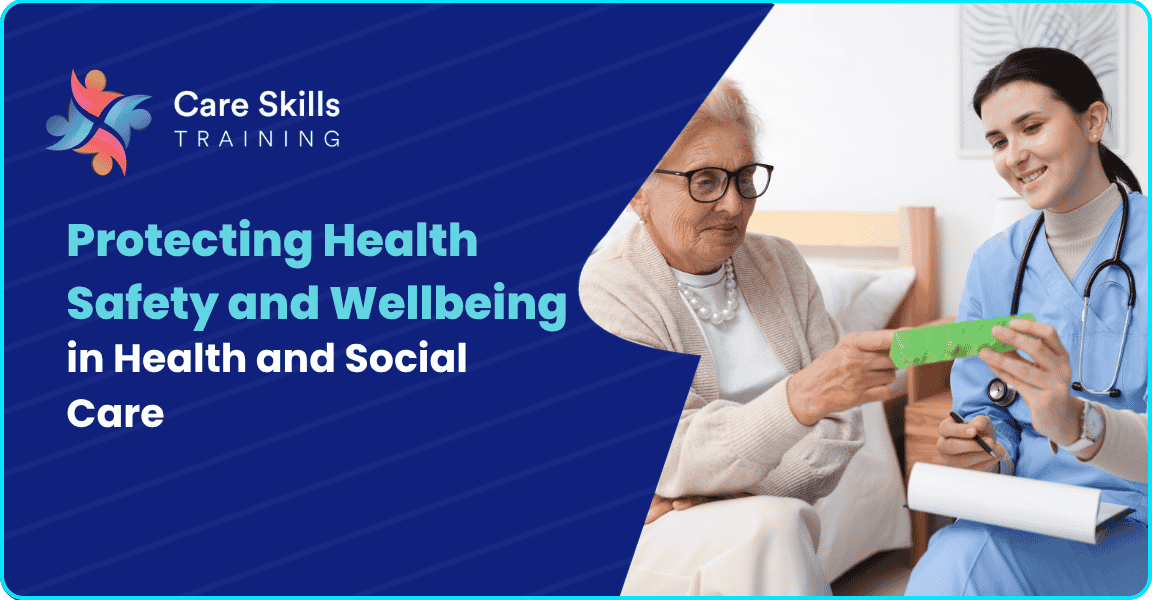
Recent UK research reveals that around 10% of NHS operations are cancelled within 24 hours, with nearly 40% of these potentially avoidable, exposing critical weaknesses in patient safety systems.
So, what is protecting health, safety and wellbeing in health and social care? This process involves measures taken to safeguard patients, carers and service users against potential risks to their physical or psychological welfare at all times.
In this blog, key areas of health and safety, physical wellness hacks, mental and emotional well-being procedures and environmental factors were covered. Additionally, you will also explore the professional Standards in Health and Social Care. Let’s dive in.
What is protecting health, safety, and wellbeing in health and social care?

In recent times, health, safety and wellbeing, as a combined protection, have become crucial to delivering high-quality care across health and social care settings. Effective practices reduce risks, prevent harm, and promote positive outcomes for patients and service users.
Usually, a safe care environment is provided by a system designed to protect lives and dignity. Often, maintaining structured policies, continuous risk assessment, and strict professional standards. From infection control to safeguarding, every action plays a role in preventing harm and maintaining trust in care services.
Examples of Health Safety and Wellbeing in Health and Social Care
The process of ensuring the safety of an individual when delivering health and social care requires specific measures that will ensure the protection of such persons. These measures range from infection prevention using hand hygiene and PPE, safe movements and lifting procedures that do not cause injury, among others.


Also, well-being is often supported by promoting dignity, respect, and emotional care. And this can include safeguarding vulnerable individuals from abuse, encouraging social interaction, and supporting mental health needs. Providing a clean, safe, and supportive environment ensures individuals feel valued and secure, improving their overall quality of life in health and social care settings.
Ensuring Safe Practice in Health and Social Care
Ensuring safe practice is a must in health and social care. To regulate this practice at the highest level every day, you must follow the seven steps of patient safety to ensure that no patient suffers a major mishap.
| Step | What It Means | Why It Matters |
| Build a safety culture | Create an open, honest environment | Staff feel safe to speak up |
| Lead and support staff | Strong leadership and guidance | Encourages safe practices |
| Integrate risk management | Identify and reduce risks | Prevents harm before it happens |
| Promote reporting | Report errors and near misses | Helps spot patterns and issues |
| Involve patients | Communicate and include patients | Builds trust and improves care |
| Learn and share lessons | Review incidents and improve | Stops mistakes from repeating |
| Implement solutions | Take action to fix problems | Ensures long-term safety improvements |
What are the 7 key areas of health and safety?
If you think following only seven steps will be enough, then there are seven key areas of health and safety which are followed to establish a comprehensive framework for identifying, managing, and minimising risks in health and social care settings. They are:-
1. Risk Assessment and Management – It is an activity which is aimed at identifying, assessing, and managing risks within the care environment. This is achieved through undertaking risk assessments, implementing risk control measures, and reviewing the measures periodically in order to minimise any risks that may be faced by those utilising health care services.
2. Infection Prevention and Control (IPC) – Implementation of measures based on evidence, such as standard precautions, aseptic techniques, and correct use of personal protective equipment in order to minimise healthcare-associated infections and ensure a safer healthcare environment.
3. Fire Safety and Emergency Preparedness – Complying with fire safety laws in the following ways: performing fire risk assessments, fire safety training of staff, evacuation strategies, and maintenance of fire detection and suppression equipment.
4. Manual Handling and Moving & Positioning Safely – Adherence to ergonomic guidelines in relation to manual handling tasks (e.g., use of lifting equipment and aids) in order to prevent musculoskeletal injuries.
5. Medicines Management and Safety –Safe procedures for prescribing, storing, administering, and documenting medications based on regulatory compliance and standards in order to achieve optimal treatment results in the healthcare industry
6. Safeguarding and Duty of Care –The use of safeguarding measures that ensure people are safe from harm, abuse, neglect, and exploitation through having a professional duty of care.
7. Environmental and Workplace Safety – Providing a safe, clean, and orderly working environment, such as the prevention of accidents and injuries, safety in the use of equipment, and adherence to health and safety policies that ensure wellbeing.
Health, Safety and Wellbeing at Care
Good health is synonymous with safety, and wellbeing is very crucial because only by doing that effectively would achieve good results at health care sector. Here are three main points on which good health and safety depend, and these need to be taken into consideration with great importance. They are:-

1. Legal Reasons – We have to make sure we adhere to all health and safety regulations and rules. Otherwise, we will face penalties, legal suits, or even close down our activities.
2. Moral Reasons – It’s our obligation to ensure the health, safety, and wellbeing of everyone who is there. This refers to both clients and employees, as well as visitors.
3. Financial Reasons – Health and safety save money since they minimise any injuries and cases of absence due to sickness.
Good health is taking care of yourself on many levels. For instance, you need to think about your physical, psychological, and social wellbeing.
Physical Wellness
Physical wellbeing should be the main goal of being healthy. Here are quick rules that you could follow at health care:
1. Workout Consistently: Make sure to have about 150 to 300 minutes of moderate aerobic exercise weekly. Small changes, such as using stairs or taking a walk during lunchtime, will contribute greatly to your health.
2. Healthy Eating: Opt for foods that contain plenty of nutrients. Eat more fruits, vegetables, legumes, and whole grains. WHO recommends that daily salt consumption should not exceed 5 grams. Free sugars should constitute less than 10 per cent of daily energy intake.
3. Get Enough Sleep: Have a good sleeping pattern with enough sleep per day, seven to nine hours.
4. Have Regular Medical Examinations: Make appointments to visit your physician and undergo body tests regularly.
5. Stay Away from Poisonous Substances: Stopping smoking can help you live for ten additional years. Moreover, drinking less alcohol helps avoid over two hundred diseases.
Mental and Emotional Well-being
Maintaining mental wellness is as crucial as maintaining physical wellness and necessitates consistent effort. These are the 5 steps you could follow:
1. Mindful Living: Live in the present moment. It may help reduce stress levels and enhance your wellbeing. You may employ a range of strategies, such as deep breathing and the 5-4-3-2-1 technique, to regulate your intense feelings.
2. Social Connection: Healthy connections with others offer emotional comfort and foster positive self-regard. Spend quality time with your loved ones or join groups in the community to avoid being socially lonely.
3. Learn Continuously: Acquiring new talents such as drawing or undertaking tasks can assist you in gaining self-confidence. It may also provide you with purpose.
4. Serve Others: Acts of goodwill and community service bring joy and rewards.
5. Limit Social Media Exposure: Limit your usage for mental peace. Avoid using social media if it increases stress or unhealthy comparison.
Environmental and Lifestyle Factors
Your surroundings and daily rituals also play a role in your long-term health. This could go for:
- Spending Time in Nature: Being outdoors lowers stress, boosts focus, and gives you Vitamin D.
- Managing Healthy Workspace: Set up your workspace ergonomically. This helps prevent back and neck strain, especially if you sit at a desk for long hours.
- Safe Environments:
- Reduce exposure to pollutants by properly venting gas stoves.
- Use water filters to remove contaminants from drinking water.
- Monitor local air quality to identify and address potential health risks.
If you need personalised advice or feel overwhelmed, talk to a healthcare professional.


Professional Standards in Health and Social Care
In the UK, professional standards ensure that care is safe, ethical, and legal. There are three levels of professional standards in the UK:
1. The Regulators
Some organisations hold the “license” for professions. If standards are not adhered to, the professional may have their license revoked.
National (for all four countries)
▪️NMC (Nurses & Midwives)
▪️GMC (General Practitioners)
▪️HCPC (Paramedics, Physiotherapists, etc.)
Devolved Authorities (only applicable to Social Care)
▪️England: Social Work England
▪️Scotland: SSSC
▪️Wales: Social Care Wales
▪️NI: NISCC
2. Core Legal Standards
The CQC (Care Quality Commission) ensures “fundamental standards” in England. These are the legal standards for:
▪️Personalisation: meeting the needs of the individual
▪️Dignity and respect: respecting everyone as equal
▪️Safety: keeping people safe from preventable harm
▪️Duty of candour: the legal duty to tell the truth and say sorry.
FAQ
What are the 5 C’s of health and safety?
The 5 C’s often refer to competence, control, co-operation, communication, and co-ordination. These help organisations manage workplace risks, meet legal duties, and maintain a safe working environment for staff and visitors.
What are the 5 aspects of health and wellbeing?
The five main aspects are physical, mental, emotional, social, and financial wellbeing. Together, they affect a person’s overall quality of life, daily functioning, and ability to stay healthy and balanced.
What are the three main reasons for health and safety?
The three main reasons are to protect people from harm, comply with legal requirements, and reduce business risks. Good health and safety also supports staff wellbeing and improves workplace productivity.
Conclusion
Protecting health, safety and wellbeing in health and social care can’t be taken lightly, as real lives depend on it. This makes it essential to ensure that individuals receive care in secure, respectful, and supportive environment, where risks are minimised, and dignity is maintained at all times.
After all, hygiene, safe moving, and other measures can mean the difference between delivering the necessary assistance on time and neglecting some aspect of a situation, which will result in injury. However, as vital as knowing everything by heart may be, it does not mean that one must rely on memory alone.
On the contrary, being responsible, attentive, and reliable are among those qualities which should characterise an exemplary caregiver or any member of this profession. It is crucial to understand that every individual receiving medical care deserves respect and that it is a caregiver’s job to look after their health and wellbeing.




Level 3 Safeguarding Children and Vulnerable Adults
4.94.9Original price was: £119.00.£29.99Current price is: £29.99.
4405 Students

4 Hours

Level 5 Designated Safeguarding Lead (DSL)
4.94.9Original price was: £199.00.£49.99Current price is: £49.99.
4197 Students
7 Hours
-
3409 Students
17 Hours





0 responses on "Protecting Health Safety and Wellbeing in Health and Social Care"