


Our Most Popular Categories
Trending
Health and Social Care
Safeguarding
First Aid
Care Certificate
Food Hygiene
Mental Health
Health and Safety
Animal Care & Training
Business Essentials
Career Bundles
Other Courses

- Yearly Subscription: Unlimited Access to 500+ Courses
- Level 3 Safeguarding Children and Vulnerable Adults
- Level 5 Designated Safeguarding Lead (DSL)
- Care Certificate Course
- Safeguarding Level 4 Training
- Health and Social Care Level 3 Diploma
- Accredited Dog First Aid, CPR and Grooming
- Trauma-Informed Care Training
- Level 3 Safeguarding Children and Vulnerable Adults
- Level 5 Designated Safeguarding Lead (DSL)
- Safeguarding Level 4 Training
- Designated Safeguarding Lead (Level 3 DSL Training)
- Safeguarding Adults Level 3
- Level 2 Safeguarding Children and Vulnerable Adults
- Level 3 Diploma in Nursing Assistant Training
- Safeguarding Adults Training Level 3
- Care Certificate Course
- Mandatory Training For Care Staff and Care Workers
- Level 2 Safeguarding Children and Vulnerable Adults
- Care Planning and Record Keeping in Health and Social Care
- Family Support Worker Training
- Training For Care Workers (Complete Package)
- Care Certificate Standards (1 to 16) + Level 2 And 3 Diploma in Health and Social Care
- Mandatory Training for Care Home Staff Training
- Accredited Dog First Aid, CPR and Grooming
- Pet Nutrition Diploma
- Pet First Aid and CPR Certification
- Pet Care and Psychology Diploma
- Learn to Launch and Grow a Pet Business
- Cat First Aid, CPR and Emergency Care
- Complete Dog Behaviour and Training
- Dog First Aid, CPR & Grooming + Safety for Pet Pros & Owners
- Care Certificate Standards 1-16 (The Complete Bundle)
- Training For Care Workers (Complete Package)
- Care Certificate Standards (1 to 16) + Level 2 And 3 Diploma in Health and Social Care
- Mandatory Training for Care Home Staff Training
- First Aid Essentials 1 to 6 Bundle
- Leadership and Management Courses
- Mandatory and Statutory Trainings For Adult Social Care
- Level 3 Admin PA and Secretarial Diploma Bundle
- Diabetes Awareness Training
- Baby Massage Training
- Employment Law Training
- Learn to Launch and Grow a Pet Business
- Complete Dog Behaviour and Training
- Dog First Aid, CPR & Grooming + Safety for Pet Pros & Owners
- Drugs and Alcohol Awareness Training
- Dog Care, Dog Grooming, and Dog First Aid Course Online

Offer Ends In
Use Code


Inadequate training for care workers in the UK has significantly compromised patient safety and staff retention. About 36% of care workers have reported that training gaps have put lives at risk.
According to Skills for Care (2024), the turnover rate for care workers who did not receive proper training was 35.4%, notably higher than the 28.0% rate for those who did. Mandatory training has become a necessity for care workers. What are the mandatory training for domiciliary care workers?
Here, you will learn everything there is to know about mandatory training for care workers in the UK. You will also understand the need for mandatory training for domiciliary care workers. Explore more.
Who are domiciliary care workers?
Care workers play a crucial role in their care receivers’ lives. A domiciliary care worker (also known as a home carer) is a professional worker who offers individual care to patients in their own homes.
Domiciliary care workers help their patients live a healthy, peaceful life independently. They help in activities like washing, dressing, medication, eating, and some household cleaning. Other than that, they also provide companionship and emotional assistance.

Care workers should be aware of person-centred care and honour the right of an individual to make their own choices. They should be capable of working in a manner where they value consent when giving care and support, and be actively involved.
Do domiciliary care workers need training?
Care workers in the UK are required to complete mandatory training to ensure safety and legal compliance. This usually involves training on safeguarding (adults/children), fire safety, moving and handling, infection control, and health/safety.
These requirements are also often known as statutory training or core skills training. It comprises Care Certificate requirements, medication administration, and first aid, and may need periodic or annual refresher courses.
Other than this, care workers also need to develop their personal qualities with the help of training. Learn about the 10 qualities of a good caregiver in the UK.
Categories of Mandatory Training for Domiciliary Care Workers
Mandatory training for domiciliary care workers is categorised into 4 key areas. Let’s take a look at the key categories of mandatory training for domiciliary care workers!
Safeguarding
Safeguarding Adults (Levels 1 and 2), Safeguarding Children and Oliver McGowan Compulsory Training on Learning Disability and Autism.
Health and Safety
Moving and handling of people, moving and handling of objects, infection prevention and control, first aid (basic life support), fire safety, and COSHH.
Person-Centred Care
It includes duty of care, privacy and dignity, equality and diversity, person-centred approaches, and communication. This is in the CQC fundamental standards (person-centred care, dignity and respect).
Clinical/Specific Care
Medicines management/administration, nutrition and hydration, dementia awareness, mental health conditions, and Mental Capacity Act/ Deprivation of Liberty Safeguards (DoLS).
| Type of Training | Requirement Source |
| Health and Safety | Statutes ( Health and Safety at Work Act 1974) |
| Fire Safety | Statutes ( Health and Safety at Work Act 1974)Fire Safety (Regulatory Reform) Order 2005. |
| Equality, Diversity and Human Rights | Human Rights Act 1998 and Equality Act 2010 |
| Infection, Prevention and Control | Health and Social Care Act 2008: Code of Practice on the Prevention and Control of Infection. |
| Manual Handling | Manual Handling Operations Regulations of 1992.Management of Health and Safety at Work Regulations 1999. |
| Safeguarding Adults | M CQC/Care Inspectorate Scotland/Care Inspectorate Wales/RQIA. |
| Safeguarding Children | M CQC/Care Inspectorate Scotland/Care Inspectorate Wales/RQIA. |
What are the mandatory training for domiciliary care workers in the UK?


Here, we will elaborate on the mandatory training that is required for domiciliary care workers to work in the UK.
Health and safety awareness training
Your own and others’ responsibilities include,
- Risk assessment,
- Hazardous substances,
- Security measures,
- Own mental health and personal well-being.
If not undertaking formal basic life support or first aid training, the training should also include
- Types of accidents and sudden illness which can occur.
- Procedures to be followed and what can and can’t be carried out in response to an accident, sudden illness or health condition.
Infection prevention and control training
Infection prevention and control training includes,
- Causes and chain of infection,
- Systems and procedures within the workplace, own role and role of others,
- Personal hygiene, including hand hygiene,
- Types of and correct use of personal protective equipment,
- Procedures required in the setting, such as management of infection, cleaning, spills and clinical waste.
Adult safeguarding training
It includes the following,
- Principles of adult safeguarding,
- How to reduce the likelihood of abuse,
- Policies and procedures in the work setting,
- Your own and others’ roles and responsibilities,
- How to respond,
- Restrictive practices,
- Local and national context,
- Required learning content may also be directed by commissioners.
Basic life support and first aid training
Basic life support and first aid training includes,
- Basic life support,
- Recognising and safely responding to accidents and sudden illness,
- Providing basic life support,
- The accredited body delivering the training will set the content.
Assisting and moving people
It includes,
- Legislation, guidelines, policies, procedures and protocols,
- Anatomy and physiology,
- Risk management,
- Moving and positioning people safely and with dignity,
- Using equipment if required,
- What can and can’t be carried out within one’s own responsibilities, and when to seek advice,
- Training can be accredited, and the accredited body delivering it will set the content.
Child safeguarding training
As stated within the Care Certificate, Standard 11 explains what they must do if they suspect a child, young person (met in any circumstances) is being abused or neglected.
Learning disability and autism awareness training
As stated in CQC Regulation 18,
- How to interact appropriately with people with a learning disability and autistic people, at a level appropriate to their role.
- Staff working in specialist services, or with specific duties, may need further training to develop their capabilities to enable them to perform their roles.
- Employers are responsible for determining if any further training is required.
Food hygiene training
The necessity of food hygiene and safety training includes the following,
- Food safety requirements and practices,
- Good hygiene when providing and supporting people with food and drinks,
- Training is typically accredited, such as the food hygiene certificate. The accredited body delivering it will set the content, but accreditation is not essential.
You can learn more about food hygiene and how you can manage food hygiene in care homes properly.
Medication administration training
Medication administration training has,
- Legislation, policies, procedures, and guidelines,
- Common types of medication and their use,
- Procedures and techniques for administration,
- Preparing for the administration of medication,
- Administering and monitoring medication safely,
- Roles and responsibilities in the process,
- What can and can’t be carried out within one’s own responsibilities, and when to seek advice,
- Additional training may be required in how to administer specific medicines, such as patches, creams, inhalers, eye drops and liquids.
Why do care workers need mandatory training?
Let’s understand the necessity of mandatory training and why domiciliary care workers need mandatory training to work in the UK!
Protecting Adults
Anyone who wants to offer domiciliary care will be expected to know the laws and regulations that are used to protect adults. These regulations are part of this training, along with essential training on recognising abuse, unsafe care practices and others.
Moving and Handling
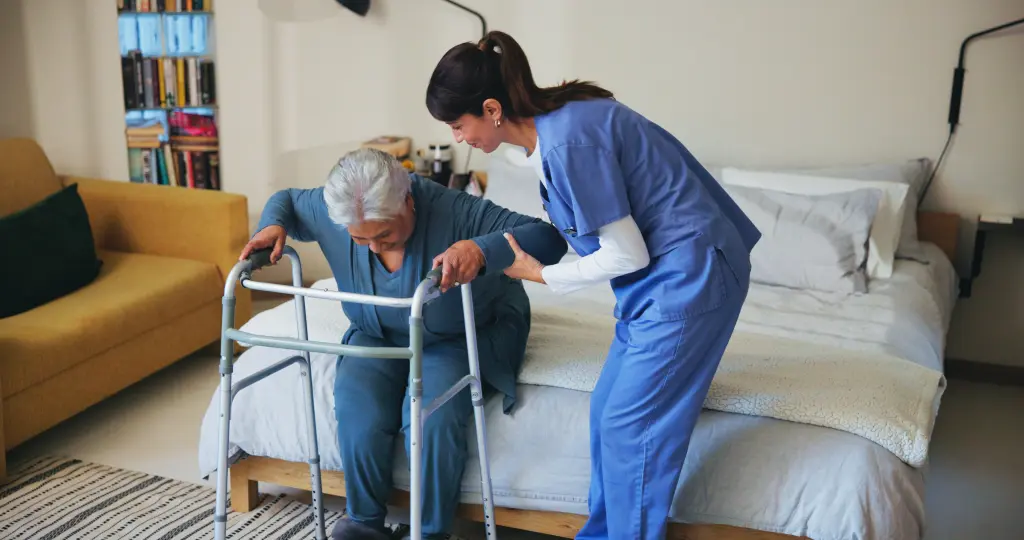
Sometimes the domiciliary care worker could be asked to move an adult. This training gives one a general understanding of how to do so safely and effectively. You will also be informed on how to prevent some of the common moving and handling errors, operation of related equipment, among others.
Medication Administration

This is a mandatory and legal training requirement that deals with how to help or administer medicine to individuals under your care. Given that most of the elderly adults are habitually taking some form of medicine, this training is a must.
Infection Control
WHO reported that more than 95 per cent of all COVID-19 deaths have been seen in individuals older than 60. Therefore, never before has it been so significant to ensure the containment of the spread of infectious agents among the elderly. The training offers the crucial fundamentals of infection control.
Food Hygiene
Domiciliary care workers are also involved in delivering or preparing food to the people under their care at their homes. This training encompasses the simple aspects of food safety, such as safe food preparation and presentation, food hygiene rules and regulations, among others.
Fire Safety
Since the elderly are usually mobility-challenged, fire becomes a great danger to them. This training will offer basic training in the discovery of fire hazards, fire propagation, elementary fire safety, the working of basic firefighting gear, and a lot more.
First Aid
Even at home, the vulnerable individuals might need first aid. This training deals with the fundamentals of first aid, how to identify particular health issues, the treatment of injuries caused by falls, CPR and so on.
Care Certificate
Domiciliary care workers usually work alone and hence will be required to acquire a Lone Working Care Certificate. It will be informative on how to assist people at home, basic health and safety mechanisms, care plan record keeping and so on.
Recording and Reporting
Records and reports are necessary because they contribute to enhanced teamwork and intervention to protect the health and well-being of people. The care team needs to realise the necessity of secure information handling in settings and be aware of where they might receive assistance to help them manage information.
Recording and reporting as CQC fundamental standards also includes complaints and good governance, where the management must monitor performance. Besides an annual review of knowledge and competency, learning and development resources must be delivered every 3 years.
Performance Monitoring
Performance monitoring and competence of care staff should be done by managers at least once a year. They are expected to give them learning and development opportunities every 3 years and upon identification or need.
Care Quality Commission (CQC)
CQC (Care Quality Commission) is the regulator of health and social care in England, which is an independent institution. All national regulators are required to have comparable requirements and guidance regarding the training of care staff and compliance with regulations.

All national regulators provide comprehensive guidelines to ensure that providers of care adhere to the conditions of the regulations. The CQC expects health and social care providers to,
- Have a sufficient number of qualified and competent professional workers with appropriate skills and experience that are necessary to satisfy the needs of their service users.
- Give effective support, training, appraisals and supervision to care staff so that they can complete their role and duties.
- Encourage care staff to obtain additional qualifications and present evidence (where necessary) to the relevant regulator to demonstrate that he or she can practice within the professional standards.
- In the case of missing these components or the lack of satisfactory evidence that a social care provider is going to do so, the CQC is allowed to undertake regulatory measures. This encompasses the rejection of the registration of the provider.
Frequently Asked Questions (FAQs)
What is CQC mandatory training?
CQC mandatory training refers to the essential training required for care workers. They must undertake it to meet the regulatory standards set by the CQC. It also ensures that care workers possess the necessary skills and knowledge to provide safe, effective, and compassionate care.
What are the six core of care?
The six core components of care work are care, compassion, competence, communication, courage, and commitment. It forms the foundation of effective, compassionate, and person-centred care and support.
What are the CQC 5 standards of care?
The 5 CQC (Care Quality Commission) standards are Safe, Effective, Caring, Responsive, and Well-Led. It is used to assess health and social care providers in the UK to determine if the care is safe and effective.
What are the 4 safeguarding duties?
The four safeguarding duties are how to recognise, respond, report and record safeguarding concerns. They are also known as the 4Rs of safeguarding that help fulfil safeguarding duties efficiently.
Is safeguarding training mandatory?
Yes, it is a legal requirement for anyone who works with children, young people, and vulnerable adults. If they fail to prove that they have completed a safeguarding training course, they could face prosecution.
Conclusion
Domiciliary care workers play a significant role in their patients’ lives. They not only provide person-centred care and support but also enable their patients to make their own choices. What are the mandatory training for domiciliary care workers is an important query here.
The primary goal of every care worker is to ensure a healthy, safe, and peaceful life for their care receivers. One of the most essential aspects of care work is safeguarding individuals. It protects them from harm, neglect, or any form of abuse. It also empowers their everyday life decisions.
Domiciliary care workers build a friendly, compassionate relationship with their patients. It gives them a sense of friendship, comfort, reliability, and emotional support. This is why every care worker should undertake mandatory training to build these skills and knowledge.




Level 3 Safeguarding Children and Vulnerable Adults
4.94.9Original price was: £119.00.£29.99Current price is: £29.99.
4515 Students

4 Hours

Level 5 Designated Safeguarding Lead (DSL)
4.94.9Original price was: £199.00.£49.99Current price is: £49.99.
4263 Students
7 Hours

3456 Students
17 Hours










0 responses on "What Are the Mandatory Training for Domiciliary Care Workers?"