


Our Most Popular Categories
Trending
Health and Social Care
Safeguarding
First Aid
Care Certificate
Food Hygiene
Mental Health
Health and Safety
Animal Care & Training
Business Essentials
Career Bundles
Other Courses

- Yearly Subscription: Unlimited Access to 500+ Courses
- Level 3 Safeguarding Children and Vulnerable Adults
- Level 5 Designated Safeguarding Lead (DSL)
- Care Certificate Course
- Safeguarding Level 4 Training
- Health and Social Care Level 3 Diploma
- Accredited Dog First Aid, CPR and Grooming
- Trauma-Informed Care Training
- Level 3 Safeguarding Children and Vulnerable Adults
- Level 5 Designated Safeguarding Lead (DSL)
- Safeguarding Level 4 Training
- Designated Safeguarding Lead (Level 3 DSL Training)
- Safeguarding Adults Level 3
- Level 2 Safeguarding Children and Vulnerable Adults
- Level 3 Diploma in Nursing Assistant Training
- Safeguarding Adults Training Level 3
- Care Certificate Course
- Mandatory Training For Care Staff and Care Workers
- Level 2 Safeguarding Children and Vulnerable Adults
- Care Planning and Record Keeping in Health and Social Care
- Family Support Worker Training
- Training For Care Workers (Complete Package)
- Care Certificate Standards (1 to 16) + Level 2 And 3 Diploma in Health and Social Care
- Mandatory Training for Care Home Staff Training
- Accredited Dog First Aid, CPR and Grooming
- Pet Nutrition Diploma
- Pet First Aid and CPR Certification
- Pet Care and Psychology Diploma
- Learn to Launch and Grow a Pet Business
- Cat First Aid, CPR and Emergency Care
- Complete Dog Behaviour and Training
- Dog First Aid, CPR & Grooming + Safety for Pet Pros & Owners
- Care Certificate Standards 1-16 (The Complete Bundle)
- Training For Care Workers (Complete Package)
- Care Certificate Standards (1 to 16) + Level 2 And 3 Diploma in Health and Social Care
- Mandatory Training for Care Home Staff Training
- First Aid Essentials 1 to 6 Bundle
- Leadership and Management Courses
- Mandatory and Statutory Trainings For Adult Social Care
- Level 3 Admin PA and Secretarial Diploma Bundle
- Diabetes Awareness Training
- Baby Massage Training
- Employment Law Training
- Learn to Launch and Grow a Pet Business
- Complete Dog Behaviour and Training
- Dog First Aid, CPR & Grooming + Safety for Pet Pros & Owners
- Drugs and Alcohol Awareness Training
- Dog Care, Dog Grooming, and Dog First Aid Course Online

Offer Ends In
Use Code


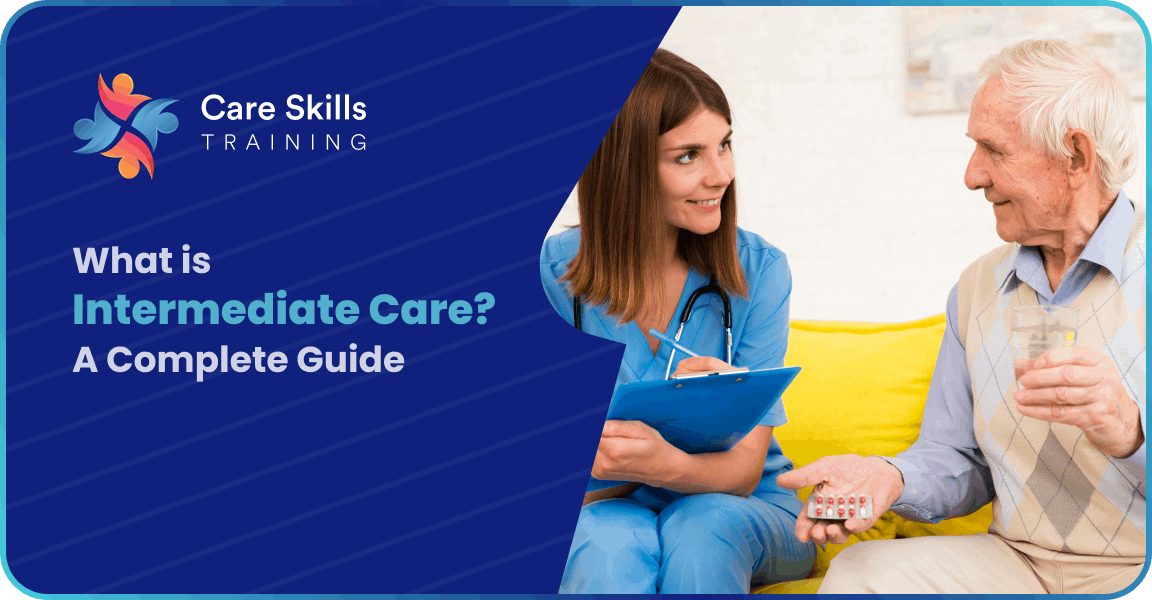
After recovery from any fall, injury, illness, or hospital stay, people need help to live independently. This is where intermediate care comes in.
So, what is intermediate care? This is the immediate care that someone needs when they are released from medical care or need recovery after surgery or any illness or injury. Intermediate care takes the pressure off hospitals to help a patient get back to their independent life.
This blog post goes in-depth on how intermediate care functions, its types, who can receive it, and who can provide it. Let’e explore.
What is intermediate care?

Intermediate care is a short-term and temporary health support. It helps patients, usually older adults, recover from an illness, injury, surgery, or leaving the hospital. It is also known as rehabilitation, reablement and recovery services.
After intensive care, it takes time for someone to get back to leading their normal life independently. And for that, they don’t have to be admitted to the hospital.
Basically, intermediate care helps a patient to live their life independently. This help can be both before being admitted or released from the hospital.
Why is intermediate care important?
The importance of intermediate care goes beyond patient care by creating space for serious patients in hospitals. Intermediate care gives people the support they need to recover without automatically moving into long-term care.
So, intermediate care is important because:
- It reduces hospital readmissions
- It frees up hospital beds
- It prevents unnecessary moves into residential care or nursing homes
- It improves outcomes and quality of life
Who can receive intermediate care?
Whether someone needs intermediate care or not depends on their need, not diagnosis. Generally, intermediate care is for older adults who need short-term care, rehabilitation, or assisted living support.
Here is a list of the people who are more likely to be eligible for intermediate care:


- Need support after leaving the hospital
- Recovering from an illness or injury
- Need help to regain mobility after a fall
- Need rehabilitation after surgery or treatment
- Need help completing daily tasks because of a health problem
- Need support to avoid an unnecessary hospital admission
- Need short-term help before returning to your normal routine
- Those who have chronic illnesses, such as diabetes, asthma, heart disease, etc.
If someone has a health condition, it does not mean that you will receive intermediate care. A health or social care professional will assess their needs, abilities and potential to benefit from rehabilitation or reablement.
What care will you receive during intermediate care?

During intermediate care, patient get help to regain their ability to manage everyday activities as independently as possible.
The care someone will receive is:
- Help with walking and mobility
- Exercises to improve strength and movement
- Support with washing and dressing
- Help with preparing food and other daily tasks
- Occupational therapy
- Physiotherapy
- Support with medication
- Equipment or home adaptations
- Monitoring your recovery
- Advice for managing your health at home
A team may include physiotherapists, occupational therapists, nurses, care workers, support workers and other health and social care professionals. The exact team depends on your needs and the service available in your local area.
What are the different types of intermediate care?
Intermediate care can be delivered in different ways depending on a person’s health, home environment and level of support required. The main approaches include bed-based care, home-based care and reablement.
Bed-Based Intermediate Care
Bed-based intermediate care is provided in a community hospital, care home or other dedicated intermediate care facility rather than in the person’s own home.
The main focus is still on rehabilitation, recovery and regaining independence, rather than providing permanent residential care.
So, if someone no longer needs hospital treatment but needs a higher level of therapeutic support before returning home, a bed-based intermediate care facility is the right choice for them. With rehabilitation services, a patient can improve their mobility and strength before returning home.
Home-Based Intermediate Care
Home-based intermediate care allows a person to recover in their own home. The patient receives support from health and social care professionals such as a physiotherapist, occupational therapist, community nurses, etc.
In this intermediate care facility, care staff initially provide more support and gradually reduce it as the person becomes more independent.
Crisis response
When someone’s health condition deteriorates, urgent help is needed at home. The crisis response service is designed to provide this rapid response service within 2 hours to prevent hospital admission in the first place.
For example, if an older person who has fallen suddenly becomes less mobile, or needs urgent help to manage safely at home. The crisis response team assesses the person’s needs. Then arrange short-term care, rehabilitation, equipment, or referral to other services.
Reablement
Reablement is also a short-term service. This is designed to help people regain the skills and confidence needed to manage everyday activities independently.
Reablement can be provided at home and is commonly used after illness, injury or hospital discharge. In England, it can form part of free short-term care for eligible people.
How does intermediate care work?

Intermediate care works by providing short-term and personalised support. First, an initial assessment is conducted. Then, a care plan is created with clear recovery goals.
After that, recovery and rehabilitation of the patient takes place. During this time, their progress is reviewed regularly before sending them back home.
Here is the step-by-step process on how intermediate care functions:
Stage 1: Initial assessment
A GP, hospital discharge team, social worker, or other health professional refers the person. A team then assesses their health, mobility, daily living needs, home situation, and recovery goals.
In the initial assessment, the decision of the person who is receiving care and their family member is also important. This assessment helps determine the most suitable setting and level of support.
Stage 2: Care planning
After the assessment, the care team creates an individual plan based on the person’s needs and recovery goals.
The plan may include rehabilitation exercises, personal care, mobility support, equipment and other services. The team agrees a plan focused on practical goals. These include walking safely, washing and dressing independently, preparing meals, managing medicines, or using stairs.
The person should be involved in decisions about their care, with family members or carers involved where appropriate.
Stage 3: Recovery and rehabilitation
The goal is to help the patient do as much as possible for themselves. So, this stage works towards their recovery goals. This includes physiotherapy, occupational therapy, reablement or help with daily activities.
The level of support can change as the person improves. The aim is not to keep providing the same level of care, but to help the person become as independent as possible.
Stage 4: Review and transition
The person’s progress is reviewed throughout the service. The care team ensure that the targets are being met or not.
In this stage, based on the condition of the patient, the level of support is also changed. This stage makes sure that the person receiving intermediate care returns home. After returning home, supported living can help the patient to continue receiving the right level of support while maintaining their independence.
Who provides intermediate care?
Intermediate care is usually provided by a team of health and social care professionals. In this team, there could be:
- Nurses
- Care workers
- Support workers
- Physiotherapists
- Occupational therapists
- Speech and language therapists
- Social workers
- GPs and other healthcare professionals
The team works together to help the person achieve their recovery goals and return to their usual level of independence wherever possible.
So if you want to work in intermediate care units, then completing a training on Medical Assistant UK can be beneficial for you.
FAQ
How long does intermediate care last?
Intermediate care is short-term and usually lasts for a maximum of six weeks in England. However, the exact duration depends on the person’s needs, circumstances and progress towards their recovery goals. Some people may only need support for one or two weeks, while others may need longer within the usual six-week period.
What are the benefits of intermediate care?
The main benefit of intermediate care is helping people recover and regain independence after illness, injury or hospital treatment. It can improve mobility, confidence and ability to manage daily activities while reducing the risk of hospital readmission and the need for long-term care.
Is intermediate care free in the UK?
In England, eligible people can receive intermediate care or reablement free for up to six weeks, or for as long as it is needed within the service’s usual short-term period. Eligibility is based on an assessment. Arrangements can differ across the UK, so people should check with their local health or social care service.
What happens when intermediate care ends?
When intermediate care ends, the person may return home without further support if they have regained enough independence. If they still have care needs, they may receive further assessment for ongoing health or social care services. The next step depends on their needs and progress.
Conclusion
When a person falls or gets injured or has surgery, they need time to go back to their normal life routine. To help them in these kinds of situations, intermediate care was introduced.
So, what is intermediate care? Intermediate care helps people regain their independence after any injury or illness. The main goal is to prevent patients from going to hospitals by providing short-term support that helps them recover safely at home or in a community setting.
Understanding how intermediate care works can help patients, families and carers. This can also stop unnecessary hospital admissions by creating space for those who need urgent medical treatment and hospital support.




Level 3 Safeguarding Children and Vulnerable Adults
4.94.9Original price was: £119.00.£29.99Current price is: £29.99.
4512 Students

4 Hours

Level 5 Designated Safeguarding Lead (DSL)
4.94.9Original price was: £199.00.£49.99Current price is: £49.99.
4261 Students
7 Hours

3450 Students
17 Hours







0 responses on "What is Intermediate Care? A Complete Guide"