


Our Most Popular Categories
Trending
Health and Social Care
Safeguarding
First Aid
Care Certificate
Food Hygiene
Mental Health
Health and Safety
Animal Care & Training
Business Essentials
Career Bundles
Other Courses

- Yearly Subscription: Unlimited Access to 500+ Courses
- Level 3 Safeguarding Children and Vulnerable Adults
- Level 5 Designated Safeguarding Lead (DSL)
- Care Certificate Course
- Safeguarding Level 4 Training
- Health and Social Care Level 3 Diploma
- Accredited Dog First Aid, CPR and Grooming
- Trauma-Informed Care Training
- Level 3 Safeguarding Children and Vulnerable Adults
- Level 5 Designated Safeguarding Lead (DSL)
- Safeguarding Level 4 Training
- Designated Safeguarding Lead (Level 3 DSL Training)
- Safeguarding Adults Level 3
- Level 2 Safeguarding Children and Vulnerable Adults
- Level 3 Diploma in Nursing Assistant Training
- Safeguarding Adults Training Level 3
- Care Certificate Course
- Mandatory Training For Care Staff and Care Workers
- Level 2 Safeguarding Children and Vulnerable Adults
- Care Planning and Record Keeping in Health and Social Care
- Family Support Worker Training
- Training For Care Workers (Complete Package)
- Care Certificate Standards (1 to 16) + Level 2 And 3 Diploma in Health and Social Care
- Mandatory Training for Care Home Staff Training
- Accredited Dog First Aid, CPR and Grooming
- Pet Nutrition Diploma
- Pet First Aid and CPR Certification
- Pet Care and Psychology Diploma
- Learn to Launch and Grow a Pet Business
- Cat First Aid, CPR and Emergency Care
- Complete Dog Behaviour and Training
- Dog First Aid, CPR & Grooming + Safety for Pet Pros & Owners
- Care Certificate Standards 1-16 (The Complete Bundle)
- Training For Care Workers (Complete Package)
- Care Certificate Standards (1 to 16) + Level 2 And 3 Diploma in Health and Social Care
- Mandatory Training for Care Home Staff Training
- First Aid Essentials 1 to 6 Bundle
- Leadership and Management Courses
- Mandatory and Statutory Trainings For Adult Social Care
- Level 3 Admin PA and Secretarial Diploma Bundle
- Diabetes Awareness Training
- Baby Massage Training
- Employment Law Training
- Learn to Launch and Grow a Pet Business
- Complete Dog Behaviour and Training
- Dog First Aid, CPR & Grooming + Safety for Pet Pros & Owners
- Drugs and Alcohol Awareness Training
- Dog Care, Dog Grooming, and Dog First Aid Course Online

Offer Ends In
Use Code


Live-in care is one of the fastest-growing roles in the UK care sector. So, if you want to start working as a live-in carer, then first you must understand what is live-in care.
In live-in care, a professional carer moves into a patient or client’s home to provide 24/7 support. A patient gets personal care from a carer without moving into a residential home in live-in care. That’s why it is suitable for those who don’t want to leave their house yet need special care.
This blog post covers how live-in care works, the skills you need, how to get started as a live-in carer, salary and where the career can take you. Let’s explore.
What is live-in care?
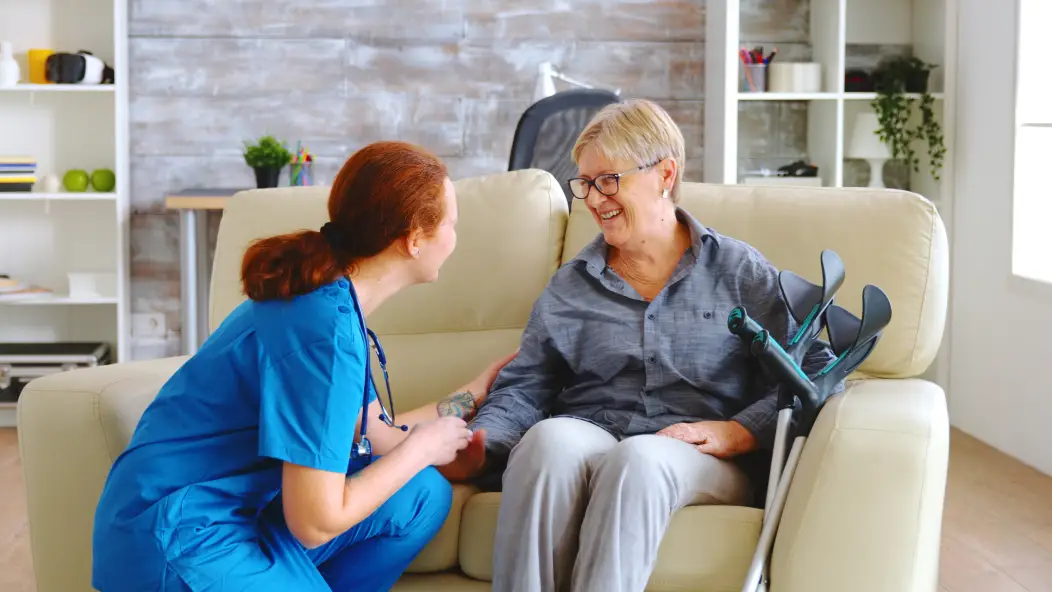
Live-in care means when a trained professional carer moves into a client’s home to provide 24/7 support. When a patient doesn’t want to shift to a care home or social care home, live-in care is for them. So this care is suitable for older adults, people with disabilities, and individuals with long-term health conditions.
The benefits of live-in care services are that the client gets fewer restrictions than in care homes. They also get personalised care, medical support, meal preparation, help with mobility, and household tasks.
It differs from residential care homes as the care routine only involves one specific client. This makes live-in care more consistent and client friendly.
How does live-in care work?
Live-in care works by matching a professional carer with a client who needs round-the-clock support in their own home. As a live-in carer, you move into the client’s home, follow a personalised care plan, and provide consistent, one-to-one support throughout the day and night when needed.
Here is how the live-in care process typically works from a carer’s perspective:
Care needs assessment — Before you begin, the client undergoes a professional care needs assessment. This identifies exactly what support is required and forms the foundation of the care plan you will follow throughout the placement.
Carer matching — You are matched to a client based on your skills, experience, personality, and any specialist care knowledge you hold. A good match benefits both the carer and the client, compatibility makes the placement work.
Moving into the client’s home — You are provided with a private bedroom and access to shared facilities. The client’s home becomes your working base, and the boundaries of your role, your rest time, and your personal space should be established clearly from day one.
Following the personalised care plan — Every task you carry out is guided by the client’s care plan. This covers personal care, medication, meals, activities, and health monitoring. The plan is your professional reference point, follow it closely and document everything accurately.


Day-to-day care delivery — Your role runs across the client’s waking hours. You assist with personal care, prepare meals, provide companionship, manage medication, and support the client’s independence in every way you can.
Rest periods — Live-in carers are entitled to designated rest periods during the day, typically two hours. These are yours to use as you choose. Rest is not optional, it is essential to sustaining the quality of care you provide.
Communication with families and healthcare professionals — You are the eyes and ears of the care team. Regular updates to family members and prompt reporting of any changes in the client’s health or wellbeing are a core part of the role.
Ongoing reviews and adjustments — Care needs change over time. The care plan is reviewed regularly, by your agency, the client’s family, and healthcare professionals. Your observations and feedback as the carer on the ground are invaluable to this process.
What does a live-in carer do?

Live in care is a specific type of home care. So, a live-in carer must provide personalised support to a client. This personalised support can vary depending on the person’s needs and care plan. However, the common duties that a live-in carer has to take on are:
- Providing personal care such as washing, dressing, and grooming
- Supporting clients with mobility and daily activities
- Helping with medication routines as required
- Preparing meals and supporting healthy nutrition
- Providing emotional support and companionship
- Assisting with appointments and community activities
- Maintaining a safe and comfortable home environment
- Monitoring changes in health and wellbeing
- Recording care notes and reporting concerns
A live-in carer does not replace medical professionals. Rather, they work alongside healthcare teams to provide consistent and personalised support.
What skills does a live-in carer need?
Live-in care works as an alternative to residential care. So, as a live-in carer works closely with the client, they need practical care skills and personal qualities.
Let’s take a look at the skills that a live-in carer must have:
- Communication skills
- Patience and resilience
- Time management
- Adaptibility
- Meal preparation
- Housekeeping
- First aid and safety
- Problem-solving skills
- Medication administration
- First aid and safety
How to become a live-in carer in the UK? (Step-by-step guide)
To become a live-in carer in the UK, you do not need a degree. If you meet the basic requirements and complete the proper training, you are good to go.
Before applying to work as a live in care provider, follow this step-by-step process to make the process easier:

Step 1: Check the basic requirements
You must have the right to work. This legal requirement ensures that you can work in the UK. Good spoken and written English skills are another requirement. Other skills include patience, compassion, problem-solving skills, etc.
Step 2: Gain care experience
Gather experience working as a care assistant, domiciliary carer, healthcare assistant or support worker. But if you are new to care, volunteering, an apprenticeship, or an entry-level care role can help you build experience.
The best thing is that some employers recruit people without previous care experience and provide on-the-job training.
Step 3: Complete relevant training
As discussed earlier, you don’t need any degree to become a live-in care provider. But if you complete relevant training in care, it gives you an advantage. So if you can complete as much relevant training as possible, you will stay ahead of the curve.
You can start by completing a care certificate training. Then you can move on to more advanced training on safeguarding adults. To handle health related emergency situations, basic first aid training can help you respond quickly and calmly.
Step 4: Develop specialist skills
When you have special skills, it opens the door for you to support a wide range of clients, which increases your job opportunities. Special skills include dementia care, Parkinson’s disease, diabetes, autism, learning disabilities, end-of-life care, catheter care, or complex care.
Step 5: Undergo a DBS check
Undergoing a standard or enhanced DBS check reviews your criminal record history. This helps to maintain a safe environment for the people receiving care.
As a live-in care provider, you will be working closely with vulnerable adults. That’s why a DBS check is a crucial part which helps employers confirm that you are suitable to work in a care role.
Career progression of a live-in carer
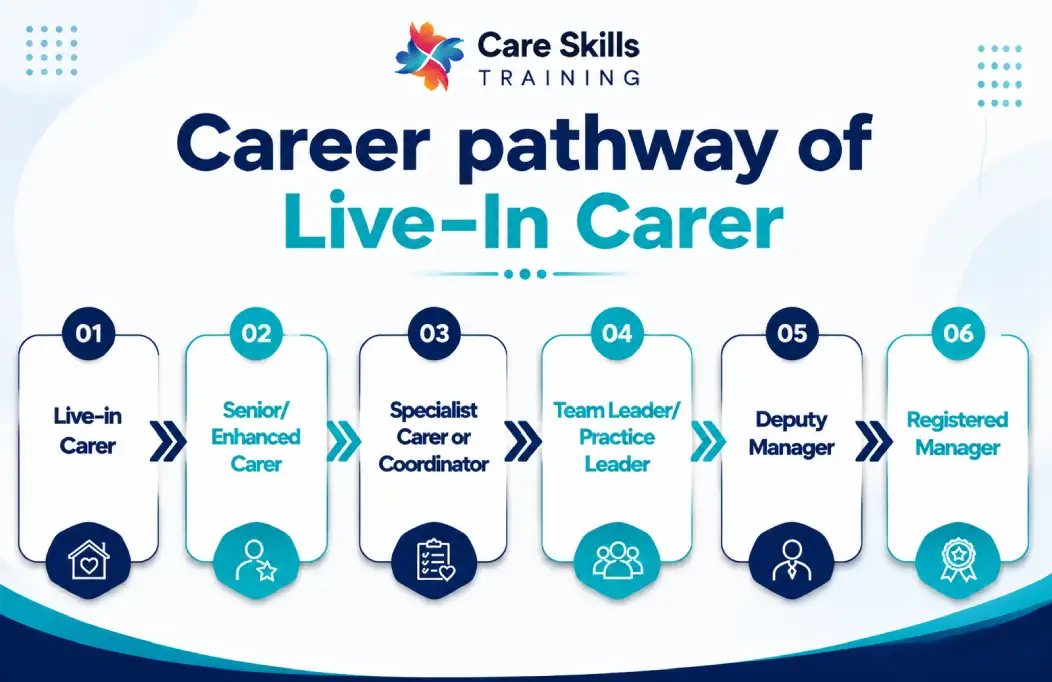
A live-in carer can progress into senior, specialist, coordination, training or management roles. With experience and additional training, a live-in carer can progress into more specific roles.
The typical career pathway for a live-in carer in the UK is:
- Live-in Carer
- Senior Carer
- Specialist Carer or Care Coordinator
- Team Leader/Practice Leader
- Deputy Manager
- Registered Manager
How much does a live-in carer get paid per week?

The salary of a live-in carer in the UK depends on experience, qualifications, the care provider, and location. It also depends on the level of support the client needs. Live-in carers usually earn more than standard care workers. Because they provide continuous support while living with the person they care for.
| Experience Level | Average Weekly Pay | Description |
| Entry-level live-in carer | £700 – £900 per week | Suitable for carers starting their career with basic care experience and training |
| Experienced live-in carer | £900 – £1,200 per week | Carers with more experience supporting clients with different care needs |
| Specialist live-in carer | £1,200+ per week | Carers with specialist skills in dementia care, complex care, or end-of-life care |
FAQ
How is live-in care funded in the UK?
In the UK, live-in care is funded through 3 primary routes. These are NHS Continuing Healthcare, local authority support, and self-funding. NHS funding supports eligible individuals, local authorities help after assessments, and self-funding allows people to pay privately for care.
Is live-in care cheaper than a care home?
Not always. For one person, live-in care can cost more than an average residential care-home place. Although it may be similar to or less than a nursing-home placement depending on location and care needs. It is often more cost-effective for couples, because one live-in care package may support both people at home
What are the four types of care?
The four types of care are:
➡️ Residential care
➡️ Nursing care
➡️ Dementia care
➡️ Respite care
Conclusion
The demand for home-based care is rising in the UK, which includes live-in care. So, what is live-in care?
Live-in care is a personalised care support where a carer moves into a client’s home to provide day and night support. The support includes personal care, medication assistance, meal preparation, mobility support, companionship, and help with daily activities.
As a live-in carer in the UK, you will get a wide range of career opportunities in the care industry. So acquire the right skills and follow the proper steps to provide the best care and progress in your career.




Level 3 Safeguarding Children and Vulnerable Adults
4.94.9Original price was: £119.00.£29.99Current price is: £29.99.
4512 Students

4 Hours

Level 5 Designated Safeguarding Lead (DSL)
4.94.9Original price was: £199.00.£49.99Current price is: £49.99.
4261 Students
7 Hours
-
3450 Students
17 Hours









0 responses on "What Is Live-in Care? A Complete Guide for UK Care Workers"