


Our Most Popular Categories
Trending
Health and Social Care
Safeguarding
First Aid
Care Certificate
Food Hygiene
Mental Health
Health and Safety
Animal Care & Training
Business Essentials
Career Bundles
Other Courses

- Yearly Subscription: Unlimited Access to 500+ Courses
- Level 3 Safeguarding Children and Vulnerable Adults
- Level 5 Designated Safeguarding Lead (DSL)
- Care Certificate Course
- Safeguarding Level 4 Training
- Health and Social Care Level 3 Diploma
- Accredited Dog First Aid, CPR and Grooming
- Trauma-Informed Care Training
- Level 3 Safeguarding Children and Vulnerable Adults
- Level 5 Designated Safeguarding Lead (DSL)
- Safeguarding Level 4 Training
- Designated Safeguarding Lead (Level 3 DSL Training)
- Safeguarding Adults Level 3
- Level 2 Safeguarding Children and Vulnerable Adults
- Level 3 Diploma in Nursing Assistant Training
- Safeguarding Adults Training Level 3
- Care Certificate Course
- Mandatory Training For Care Staff and Care Workers
- Level 2 Safeguarding Children and Vulnerable Adults
- Care Planning and Record Keeping in Health and Social Care
- Family Support Worker Training
- Training For Care Workers (Complete Package)
- Care Certificate Standards (1 to 16) + Level 2 And 3 Diploma in Health and Social Care
- Mandatory Training for Care Home Staff Training
- Accredited Dog First Aid, CPR and Grooming
- Pet Nutrition Diploma
- Pet First Aid and CPR Certification
- Pet Care and Psychology Diploma
- Learn to Launch and Grow a Pet Business
- Cat First Aid, CPR and Emergency Care
- Complete Dog Behaviour and Training
- Dog First Aid, CPR & Grooming + Safety for Pet Pros & Owners
- Care Certificate Standards 1-16 (The Complete Bundle)
- Training For Care Workers (Complete Package)
- Care Certificate Standards (1 to 16) + Level 2 And 3 Diploma in Health and Social Care
- Mandatory Training for Care Home Staff Training
- First Aid Essentials 1 to 6 Bundle
- Leadership and Management Courses
- Mandatory and Statutory Trainings For Adult Social Care
- Level 3 Admin PA and Secretarial Diploma Bundle
- Diabetes Awareness Training
- Baby Massage Training
- Employment Law Training
- Learn to Launch and Grow a Pet Business
- Complete Dog Behaviour and Training
- Dog First Aid, CPR & Grooming + Safety for Pet Pros & Owners
- Drugs and Alcohol Awareness Training
- Dog Care, Dog Grooming, and Dog First Aid Course Online

Offer Ends In
Use Code


Effective safeguarding is never about checking boxes. It means focusing on the actual human being sitting across from you. The term ‘Making Safeguarding Personal‘ (MSP) is widely used in adult social care. It places adults at the centre of safeguarding by promoting choice, involvement, and outcomes based on individual wishes.
So, what is Making Safeguarding Personal? It is a person-led approach that favours real human conversations over rigid compliance checklists. By centring on individual choices, this framework ensures care providers naturally fulfil their Care Act 2014 duties. This model reduces legal risks while consistently improving long-term adult safety outcomes.
This guide will cover everything from the core principles of Making Safeguarding Personal to workplace challenges. By the end, you will have clear knowledge about implementing these practices successfully.
What is Making Safeguarding Personal?

Making Safeguarding Personal (MSP) is a person-led approach to adult safeguarding. It stops safety from becoming a box-ticking exercise. With this method, people stay in charge of their lives, easily balancing their safety with freedom and respect. This keeps care focused on what individuals want.
This method started because adult social services used to focus only on boxes and forms. Staff often ran checks without asking the person what they needed. Leaders created this new model to fix these big problems and improve adult safeguarding for everyone.
The new approach quickly became a major part of everyday care across the UK. It changed how local authorities respond to every safeguarding concern today. Now, staff focus on protecting choices while supporting well-being and helping people stay in charge of their own lives.


How Does the Care Act 2014 Support MSP?
The Care Act 2014 supports MSP by making a person’s wellbeing and choices a legal right. This law stops councils from using rigid, robotic checklists during a crisis. Instead, it forces workers to put an adult’s feelings and personal goals at the heart of every single safety meeting.
The law moves adult protection away from old paperwork into real partnerships. It sets out strict duties around early prevention, clear advocacy, and joint working. These legal rules ensure that care teams actively support freedom while managing everyday risks safely alongside the individual.
Promotes Person-Centred Decision-Making
The Act puts the individual in total control of their own life choices. Care teams cannot make sweeping choices without asking the person first. This legal rule ensures that every single risk plan fits the user’s specific wishes.
Focuses on Prevention and Early Intervention
The law highlights that stopping harm early is always better than managing a crisis. Staff must give people clear, simple facts about abuse and neglect. This timely support helps individuals protect themselves well within their own local communities.
Access to Independent Advocacy

The law demands that vulnerable adults get proper help to share their views. If a person struggles to speak up, councils must provide an independent advocate. This vital support ensures that every adult stays involved in their care.
Person-Led Safeguarding Enquiries
Councils must run a formal check if they suspect an adult faces serious harm. Under this law, initiating a safeguarding enquiry requires staff to ask the person what they want right away. Workers use this detailed information to check these personal views during the entire case process.
Encourages Partnership Working
This law forces the police, local council, and NHS to work as a team. True partnership ensures that vital personal information moves quickly between services. Working together helps care staff create a much stronger and safer net for the adult.
The Six Principles of Making Safeguarding Personal
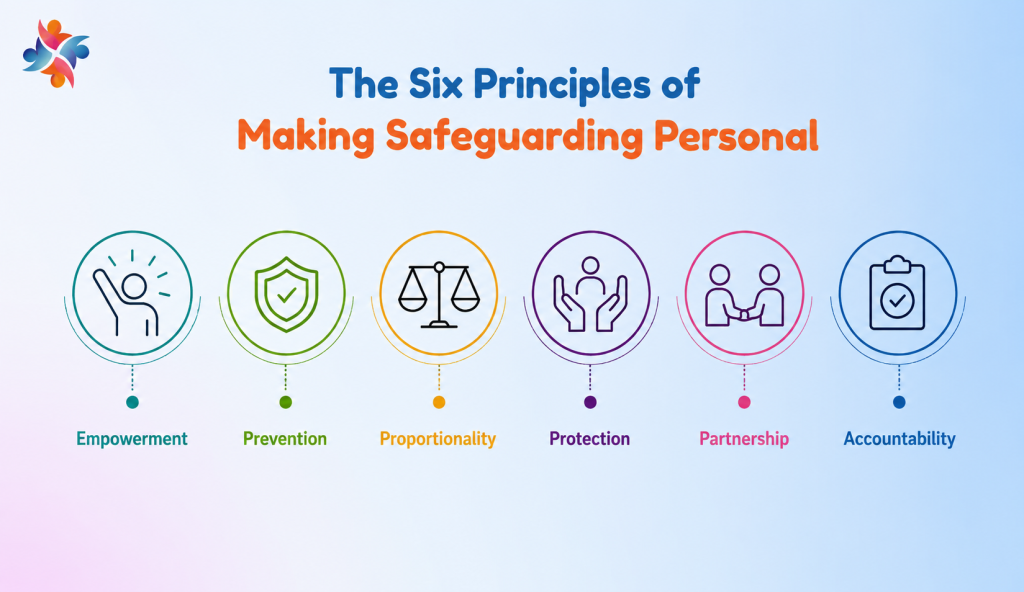
The six principles of Making Safeguarding Personal are empowerment, prevention, proportionality, protection, partnership, and accountability. These core rules guide care teams to work safely alongside adults. They ensure that all support focuses entirely on what the individual wants, keeping care kind, helpful, and professional.
Using this safety framework allows teams to deliver person-led care without losing control of real dangers. These core rules help staff balance safety and personal freedom during difficult times. Frontline workers can confidently support an adult’s choices because the framework gives them clear, structured guidance.
1. Empowerment
Staff support people to make their own choices with clear information. Workers build deep trust by letting the individual lead their own care plan. This step ensures that adults feel powerful and fully in control during a tough time.
2. Prevention
It is always much better to stop abuse or neglect before it can even start. Care teams take action early by sharing helpful tips within the local community. This vital support helps individuals protect themselves well in daily life.
3. Proportionality
Care workers must always choose the least intrusive path when fixing a risky safeguarding situation. Staff only step in when it is truly needed to prevent further risk. This careful balance keeps people safe without taking away their basic personal freedom.
4. Protection
Social care teams provide robust support to individuals who face the greatest risks. Staff work hard to stop ongoing abuse and remove people from toxic spaces. This vital help gives vulnerable adults a safe place to heal and grow.
5. Partnership
Local councils, the police, and health services must work together as true allies. Sharing information quickly helps these agencies form a strong, protective net around the adult. This joint approach ensures that no individual gets left behind or forgotten.
6. Accountability
Every single care worker must take full responsibility for their actions and choices. Agencies stay completely transparent about how they spot risk and handle serious harm. This openness builds massive public trust in the local adult safeguarding system.
Why is Making Safeguarding Personal Important?
Making Safeguarding Personal is very important because it puts people in total control of their own care. This friendly approach helps adults feel deeply respected, valued, and safe. Focusing on what people truly want builds strong trust and stops staff from making cold, robotic choices.
Here are some of the key reasons why this approach matters so much:
- Empowers Individuals: It gives adults full power to make their own choices about their care.
- Builds Trust: People open up more when they know that staff truly value their opinions.
- Improves Outcomes: Protection plans work much better when they fit a person’s actual daily routine.
- Reduces Future Crisis: Finding risks early keeps small issues from turning into major problems.
- Protects Personal Freedom: It keeps people safe from harm without taking away their personal independence.
How Organisations Can Implement MSP?

Organisations can start MSP by updating their culture and training staff. Leaders must move away from long checklists to focus on real human stories. Teaching teams to listen well ensures that every safety choice respects what each person wants and needs for their own life.
Here are some of the key ways teams can make this happen:
- Train Your Staff: Give your team comprehensive safeguarding training so they can handle hard situations with real care.
- Change Success Goals: Managers should check cases based on how happy the person is, not just fast closing times.
- Offer Free Helpers: Giving adults a trusted friend helps them speak up during stressful meetings.
- Give People Choices: Let adults pick from different safety plans instead of forcing just one option on them.
- Ask for Feedback: Talk to people after their care ends to learn how to make the service better.
Common Challenges When Applying MSP
The common challenges when applying MSP include rigid workplace habits and heavy workloads. Many care teams struggle to drop old forms for personal chats. Changing a large group takes time, and busy staff often take total control over an adult’s choices when things get scary.
Here are some of the key challenges that teams must face:
- Rigid Workplace Habits: Staff often prefer filling out safe paper forms instead of having open, friendly chats.
- Heavy Workloads: Very busy schedules make it hard for staff to slow down and build real trust with people.
- Resistance to Change: Teams can push back against new ways of working because changing old habits takes a lot of effort.
- Fear of Accountability: Workers worry they will be blamed or get into trouble if a person’s choice goes wrong.
- Balancing Choice and Safety: Staff struggle to decide when to step in to protect someone versus when to let them take risks.
Frequently Asked Questions (FAQ)
What are the four steps to making safeguarding personal?
The four steps to making safeguarding personal are engage, explore, co-produce, and review. This operational process ensures care teams engage individuals in safety conversations, explore their desired goals, co-produce customised protection plans, and review final outcomes based entirely on personal satisfaction and client well-being.
What are the seven golden rules of safeguarding data sharing?
The seven golden rules of safeguarding focus on open, legal information sharing. Care managers must remember GDPR is not a barrier, ensure transparency, seek advice, share with consent where possible, prioritise safety over secrecy, share proportionately, and maintain an accurate, secure record of every decision.
What is the first step in adult safeguarding when a concern arises?
The first step in safeguarding is ensuring the individual’s immediate physical safety from imminent harm. Once any urgent medical or safety crisis is stabilised, frontline staff must immediately ask the adult what outcomes they want to achieve before logging or submitting official corporate compliance paperwork.
What are the four aims of adult safeguarding?
The four aims of adult safeguarding are to prevent, protect, promote, and preserve. These regulatory goals guide care teams to prevent abuse early, protect vulnerable adults from ongoing harm, promote long-term well-being, and preserve individual human rights and personal independence during a crisis.
What are the four pillars of corporate safeguarding?
The four pillars of corporate safeguarding are safe people, safe environments, safe behaviour, and safe governance. This business framework requires healthcare providers to implement strict recruitment checks, maintain secure care spaces, enforce clear professional boundaries, and establish transparent internal reporting pathways.
Conclusion
Understanding What Is Making Safeguarding Personal helps modern providers deliver compliant, dignified care. Embedding this into daily safeguarding practice ensures your organisation respects client autonomy during regulatory audits. Moving away from rigid checklists allows your team to mitigate vulnerabilities while building lasting consumer trust.
Adhering to the six core principles keeps your operational framework both legally sound and highly commercially viable. These standards empower frontline staff to manage complex liabilities confidently. This structured approach protects vulnerable clients and your brand.
The Care Act 2014 mandates this integrated approach across all commercial healthcare partnerships. Continuous staff training drives operational excellence. Ethical service delivery ultimately begins by listening to people.




Level 3 Safeguarding Children and Vulnerable Adults
4.94.9Original price was: £119.00.£29.99Current price is: £29.99.
4515 Students

4 Hours

Level 5 Designated Safeguarding Lead (DSL)
4.94.9Original price was: £199.00.£49.99Current price is: £49.99.
4263 Students
7 Hours

3456 Students
17 Hours










0 responses on "What is Making Safeguarding Personal? A Guide for UK Care Professionals "