


Our Most Popular Categories
Trending
Health and Social Care
First Aid
Care Certificate
Food Hygiene
Mental Health
Safeguarding
Health and Safety
Animal Care & Training
Business Essentials
Career Bundles
Other Courses

- Accredited Dog First Aid, CPR and Grooming
- Pet Nutrition Diploma
- Pet First Aid and CPR Certification
- Pet Care and Psychology Diploma
- Learn to Launch and Grow a Pet Business
- Cat First Aid, CPR and Emergency Care
- Complete Dog Behaviour and Training
- Dog First Aid, CPR & Grooming + Safety for Pet Pros & Owners
- Care Certificate Course
- Mandatory Training For Care Staff and Care Workers
- Level 2 Safeguarding Children and Vulnerable Adults
- Care Planning and Record Keeping in Health and Social Care
- Family Support Worker Training
- Training For Care Workers (Complete Package)
- Care Certificate Standards (1 to 16) + Level 2 And 3 Diploma in Health and Social Care
- Mandatory Training for Care Home Staff Training
- Mandatory Training For Care Staff and Care Workers
- Mandatory Training for Care Home Staff Training
- Mandatory and Statutory Trainings For Adult Social Care
- Mandatory Training For Care Assistants
- Mandatory and Core Social Care Courses
- Mandatory Training For Agency Nurses
- Mandatory Training for General Practitioners
- Mandatory Training For Support Workers
- Personal Assistant Job Ready Programme
- Health and Safety Job Ready Programme
- Project Management Job Ready Programme
- Virtual Assistant Job Ready Programme
- Teaching Assistant Job Ready Programme
- Assistant Manager Job Ready Programme
- Healthcare Support Worker Job Ready Programme
- Office Manager Job Ready Programme
- Problem Solving in Leadership: Lead Your Team to Success
- Surviving Office Politics: Mastering Workplace Relationships
- Business Fundamentals Course Online
- Unconscious Bias Training
- ISO 9001 Quality Management System Training (Clauses 6-10)
- ISO 9001 Quality Management System Training (Clauses 1–5)
- Emotional Intelligence Training
- Personal Assistant Job Ready Programme
- Health and Safety Job Ready Programme
- Project Management Job Ready Programme
- Teaching Assistant Job Ready Programme
- Assistant Manager Job Ready Programme
- Healthcare Support Worker Job Ready Programme
- Office Manager Job Ready Programme
- Designated Safeguarding Lead (DSL) Job Ready Programme
- Level 3 Safeguarding Children and Vulnerable Adults
- Level 5 Designated Safeguarding Lead (DSL)
- Safeguarding Level 4 Training
- Designated Safeguarding Lead (Level 3 DSL Training)
- Safeguarding Adults Level 3
- Level 2 Safeguarding Children and Vulnerable Adults
- Level 3 Diploma in Nursing Assistant Training
- Safeguarding Adults Training Level 3
- Diabetes Awareness Training
- Baby Massage Training
- Employment Law Training
- Learn to Launch and Grow a Pet Business
- Complete Dog Behaviour and Training
- Dog First Aid, CPR & Grooming + Safety for Pet Pros & Owners
- Drugs and Alcohol Awareness Training
- Dog Care, Dog Grooming, and Dog First Aid Course Online
- Care Certificate Standards 1-16 (The Complete Bundle)
- Training For Care Workers (Complete Package)
- Care Certificate Standards (1 to 16) + Level 2 And 3 Diploma in Health and Social Care
- Mandatory Training for Care Home Staff Training
- First Aid Essentials 1 to 6 Bundle
- Leadership and Management Courses
- Mandatory and Statutory Trainings For Adult Social Care
- Level 3 Admin PA and Secretarial Diploma Bundle
- Yearly Subscription: Unlimited Access to 300+ Courses
- Level 3 Safeguarding Children and Vulnerable Adults
- Level 5 Designated Safeguarding Lead (DSL)
- Care Certificate Course
- Safeguarding Level 4 Training
- Health and Social Care Level 3 Diploma
- Accredited Dog First Aid, CPR and Grooming
- Trauma-Informed Care Training



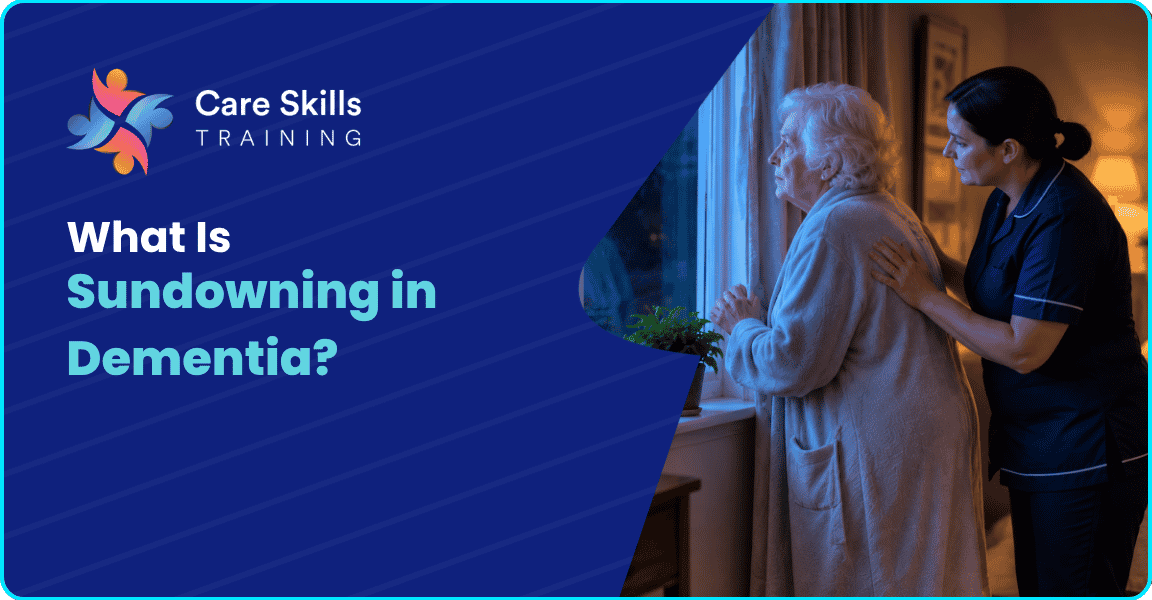
As afternoon turns to evening, something shifts. A person who was calm at lunchtime becomes restless, tearful or suspicious. Suddenly, they want to go home. Except they’re already home. Family carers often describe it as watching someone change right in front of them, and most of the time, they’ve no idea why it’s happening or what to do about it.
So what is sundowning in dementia? It’s a pattern of increased confusion, agitation and anxiety that develops in the late afternoon or evening in people living with dementia. Not a separate illness. Just a recognised set of behavioural changes, tied closely to the time of day.
Recognising sundowning for what it is makes a real difference. Once you understand the pattern, you can start looking for triggers, adjusting routines, and responding with a bit more confidence. Let’s get into the signs, what tends to cause it, and what actually helps.
What is Sundowning in Dementia Actually Mean?
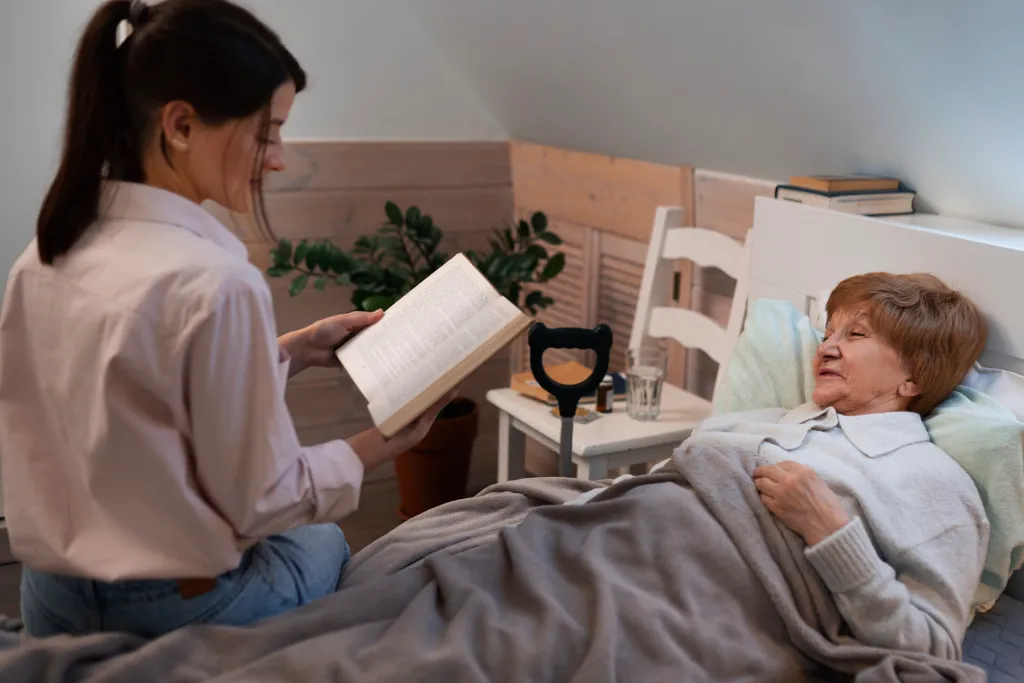
Sundowning is also known as sundown syndrome, or sometimes late-day confusion. It describes behavioural and psychological symptoms that emerge, or get worse, as daylight fades. Often it carries on into the evening or night. It can affect anyone with dementia, though it’s most associated with Alzheimer’s disease.
You won’t find it on a medical chart as a formal diagnosis. It’s a term carers, nurses and families use because the pattern is so consistent it needed a name of its own. Studies suggest it affects somewhere between one in five and two in three people with dementia, depending on the stage and type involved.


It looks different from person to person, too. Quiet withdrawal and tearfulness for some. Pacing, shouting, or trying to leave the house for others. What ties it together is the timing, symptoms reliably showing up around the same point each day.
What Are the Signs of Sundowning?
The clearest sign is a shift that tracks with the time of day, rather than anything specific that happened. Someone might seem perfectly settled in the morning, then grow agitated, confused or fearful as the afternoon wears on.
Restlessness and pacing are common. So is a jump in confusion about where they are, or who’s around them. Mood can swing fast, from calm to irritable to distressed within minutes, sometimes with no clear trigger at all. And some people become suspicious of familiar faces during these moments, which is hard on everyone involved.
Sleep often takes a hit too. They may struggle to settle, wake frequently, or become more alert exactly when they should be winding down. Occasionally, hallucinations or delusions appear alongside the confusion, usually further into the condition.
If you’re supporting someone through changes like these, it helps to build a broader understanding of mental health and dementia awareness in care work, rather than treating each evening as unrelated to the last.
What Causes Sundowning in Dementia?
Nobody’s fully cracked why sundowning happens. But a few explanations keep coming up. Dementia affects the parts of the brain that regulate the body’s internal clock, and once that rhythm is disrupted, evenings become a harder time of day to manage.
Fatigue plays its part. By late afternoon, someone with dementia has often used up a lot of their capacity just to process the world around them. There’s simply less left to cope with by the time evening rolls in.
Then there’s the light. As rooms dim, shadows stretch, and shapes get harder to read. A coat on a hook in daylight can look like something else entirely once the sun’s gone down.
Unmet needs matter more than people expect, too. Hunger, thirst, pain, needing the toilet- these things don’t always come out as a clear request. More often, they come out as agitation instead. Add a day that was either too stimulating or too quiet, and you’ve got a fairly reliable recipe for a difficult evening.
Symptoms of Sundowning vs General Symptoms of Dementia
Sundowning has its own shape, and the table below shows how the symptoms of sundowning and general symptoms of Dementia differ side by side.
| General Dementia Symptoms | Sundowning in Dementia | |
| Timing | Present throughout the day | Appears or worsens in the late afternoon or evening |
| Common signs | Memory lapses, struggling for words, not recognising a place | Agitation, restlessness, confusion, fear |
| Pattern | Fairly consistent day to day | Comes and goes with the time of day |
| What it looks like | A gradual, ongoing change | A noticeable shift from how the person seemed earlier |
Sundowning is different because of when it happens. Someone managing fine in the morning can be far more confused or upset by early evening, often with nothing obvious triggering it. It’s the shift itself that matters, not just what the behaviour looks like. Carers who jot down when things get harder tend to spot the pattern within a week or two, sometimes sooner.
At What Stage of Dementia Does Sundowning Usually Happen?
Sundowning can occur at any stage of dementia. But it’s most commonly seen during the middle stage, when confusion and communication difficulties have deepened, yet the person’s often still active and mobile.
It can appear earlier, too. In early-stage dementia, someone may still be aware of their own memory difficulties, and that awareness alone can build frustration that intensifies later in the day. This gets mistaken for a mood problem sometimes, rather than sundowning.
Further on, there’s no fixed pattern. Some families notice it easing in the later stages. Others don’t. It varies enormously, person to person, and depends heavily on the type of dementia involved.
Anyone working through the Care Certificate will recognise this from Standard 9 on awareness of mental health, dementia and learning disability, which covers exactly these kinds of behavioural changes.
How Can Carers Manage Sundowning?
Start with routine. Keeping wake times, meals and activities fairly predictable helps reduce the disorientation that often triggers evening distress. It gives the day a shape the person can actually rely on.
Light matters more than people expect. Time outside, or even just near a window during the day, supports the body’s natural rhythm. Turning household lights on before dusk softens the transition, rather than letting the room slide into shadow unnoticed.
Worth checking for unmet needs before assuming the behaviour is purely psychological. Someone who seems agitated might just be hungry, thirsty, in pain, or needing the toilet, and sorting that out often calms things down fast.
Cut back on caffeine and daytime naps where you can. Better sleep at night usually means less fatigue the next day. A quieter evening helps too, so turn the television down and clear away extra noise and clutter if you’re able to.
Above all, calm and reassuring communication makes the biggest difference. Arguing or correcting someone mid-episode tends to escalate things. A steady tone and familiar routines will get you further than logic ever will.
Many of these approaches sit within wider dementia support. If you’re weighing up care home options, it’s worth understanding what EMI care involves for people whose needs have become more complex.
When Should You Seek Advice for Sundowning?
Not every case needs urgent attention, but a few things are worth flagging to a GP or senior colleague. Sudden onset, especially if it builds quickly rather than developing gradually, is one of them.
Signs of pain, a change in appetite, or confusion that doesn’t fit the usual pattern are also worth mentioning. Better to raise a concern early than wait and see what happens.
Safety changes things. If sundowning starts leading to wandering, aggression, or a real risk of falls, it’s time to get more support involved, whether that’s a GP, a family meeting, or a fresh look at the current care plan.
Frequently Asked Questions
Is sundowning the same in every type of dementia?
Not quite. It’s most closely associated with Alzheimer’s disease, though it also shows up in vascular dementia, Lewy body dementia and other forms. How it presents, and how severe it gets, comes down to the individual as much as the type of dementia.
Can sundowning happen in early stage dementia?
Yes, though usually milder and less frequent than in the middle stages. Someone early in the condition may still be aware of their memory difficulties, and that awareness can add frustration to the evening pattern.
Does sundowning get worse over time?
Not always. It often becomes more noticeable during the middle stage, but there’s no fixed path. Some people see it ease later on. Others continue to experience it throughout.
How long does a sundowning episode usually last?
Varies widely. Some episodes pass within the hour. Others run into the night and disrupt sleep completely. A simple note of when episodes start and end can help spot patterns worth acting on.
Final Thought
Sundowning in dementia can feel unsettling, especially when it seems to arrive without warning. Understanding what is sundowning in dementia is helps carers recognise patterns, rather than something going wrong, and is often the first step towards feeling less overwhelmed by it.
A steady routine, good light, and a calm response to unmet needs won’t make sundowning disappear completely. But for a lot of families, they genuinely help. Small, consistent changes count for more than people expect.
And if the pattern changes suddenly, or safety becomes a concern, don’t sit with it alone. A GP or senior colleague can help you work out what’s going on, and support is there for the person you’re caring for just as much as it is for you.




Level 3 Safeguarding Children and Vulnerable Adults
4.94.9Original price was: £119.00.£29.99Current price is: £29.99.
4407 Students

4 Hours

Level 5 Designated Safeguarding Lead (DSL)
4.94.9Original price was: £199.00.£49.99Current price is: £49.99.
4199 Students
7 Hours
-
3409 Students
17 Hours








0 responses on "What Is Sundowning in Dementia? Signs, Causes and How to Help"