


Our Most Popular Categories
Trending
Health and Social Care
Safeguarding
First Aid
Care Certificate
Food Hygiene
Mental Health
Health and Safety
Animal Care & Training
Business Essentials
Career Bundles
Other Courses

- Yearly Subscription: Unlimited Access to 500+ Courses
- Level 3 Safeguarding Children and Vulnerable Adults
- Level 5 Designated Safeguarding Lead (DSL)
- Care Certificate Course
- Safeguarding Level 4 Training
- Health and Social Care Level 3 Diploma
- Accredited Dog First Aid, CPR and Grooming
- Trauma-Informed Care Training
- Level 3 Safeguarding Children and Vulnerable Adults
- Level 5 Designated Safeguarding Lead (DSL)
- Safeguarding Level 4 Training
- Designated Safeguarding Lead (Level 3 DSL Training)
- Safeguarding Adults Level 3
- Level 2 Safeguarding Children and Vulnerable Adults
- Level 3 Diploma in Nursing Assistant Training
- Safeguarding Adults Training Level 3
- Care Certificate Course
- Mandatory Training For Care Staff and Care Workers
- Level 2 Safeguarding Children and Vulnerable Adults
- Care Planning and Record Keeping in Health and Social Care
- Family Support Worker Training
- Training For Care Workers (Complete Package)
- Care Certificate Standards (1 to 16) + Level 2 And 3 Diploma in Health and Social Care
- Mandatory Training for Care Home Staff Training
- Accredited Dog First Aid, CPR and Grooming
- Pet Nutrition Diploma
- Pet First Aid and CPR Certification
- Pet Care and Psychology Diploma
- Learn to Launch and Grow a Pet Business
- Cat First Aid, CPR and Emergency Care
- Complete Dog Behaviour and Training
- Dog First Aid, CPR & Grooming + Safety for Pet Pros & Owners
- Care Certificate Standards 1-16 (The Complete Bundle)
- Training For Care Workers (Complete Package)
- Care Certificate Standards (1 to 16) + Level 2 And 3 Diploma in Health and Social Care
- Mandatory Training for Care Home Staff Training
- First Aid Essentials 1 to 6 Bundle
- Leadership and Management Courses
- Mandatory and Statutory Trainings For Adult Social Care
- Level 3 Admin PA and Secretarial Diploma Bundle
- Diabetes Awareness Training
- Baby Massage Training
- Employment Law Training
- Learn to Launch and Grow a Pet Business
- Complete Dog Behaviour and Training
- Dog First Aid, CPR & Grooming + Safety for Pet Pros & Owners
- Drugs and Alcohol Awareness Training
- Dog Care, Dog Grooming, and Dog First Aid Course Online

Offer Ends In
Use Code


Ever wondered what would happen when one of your employees, colleagues, or other staff at the workplace is injured badly, and you need to provide first aid to them, but then you discover that you don’t have the right equipment? Or don’t know how to provide first aid!
In this blog, we will describe what should be in a workplace first aid kit and what you should consider. We’ll also cover choosing the right supplies, such as HSE Economy Workplace First Aid items, rules and regulations, risk assessment, and typical workplace injuries. In addition, we’ll discuss how kit requirements differ based on workplace size.
Let’s dig in.
Why workplace first aid kits are important
A first aid kit ensures immediate care. It is an essential aspect of a secure and lawful workplace. Workplace first aid items are important for several reasons:
- It provides the necessary supplies for immediate care
- Helps to prevent minor injuries from becoming severe
- Speed up the recovery process
- Encourages a culture of safety among people
- Can reduce the need for expensive medical treatments
- Enable quick response in emergency situations
What should be in a workplace first aid kit?

What you should keep in your workplace first aid kit depends on the type of workplace. However, if you are considering the basic list of items, then you should include these:
- Adhesive bandages
- Sterile gauze pads
- Adhesive tape
- Cleansing wipes
- Antiseptic wipes
- Antibiotic ointment
- Instant cold packs
- Elastic bandages
- Hydrocortisone cream
- Scissors
- Tweezers
- Waterproof plasters
- Gloves
- Burn dressings
- Gel dressings
- Triangular bandages
- First aid manual
- Emergency blanket (aluminium blanket)
- Sticky tapes
- Pain relievers
- Dressing pads
You can consider taking our Emergency First Aid at the Workplace Course to boost your knowledge.
Legal requirements and duty of care
Workplace aid is necessary and legally required to keep employees safe. They must be easily accessible, routinely inspected, and equipped with the required materials.
What should be in these kits are standard bylaws, such as OSHA in the United States and HSE in the United Kingdom. Employers must ensure workplace safety risks by conducting risk assessments. They should also have first-aid training and ensure first-aid needs are met if required. Clear communication regarding where the kits are and how to utilise them is also necessary. Following these will help to protect employees.
Assessing the risk level of your workplace
Assessing the risk level of your workplace involves identifying hazards. You can assess the risk level of your workplace by
- Looking for potential sources of harm
- Consulting with employees to gather insights about potential hazards
- Evaluating the potential severity of the harm
- Analysing records of previous accidents
- Evaluating the health and physical condition of employees
- Reviewing the adequacy of safety training
- Ensuring first aid items are suitable
- Continuously monitoring the effectiveness of risk control measures
You can follow these steps to carefully evaluate and handle workplace risk levels, which leads to a safer environment for your employees.


Understanding the types of workplace injuries
Understanding the different types of workplace injuries is critical for ensuring employee safety. These injuries include:
- Falls
- Trips
- Slips
- Cuts and bruises
- Sprains and strains
- Burns
- Respiratory problems
- Repetitive strain injuries
- Crush injuries
- Electrical injuries
- Fractures
- Heat or cold stress
- Chemical exposure and
- Ergonomic injuries
Recognising these types of injuries enables businesses to ensure that employees have proper protection.
Choosing the right first aid kit at workplace
Choosing the right first aid kit for the workplace is critical for ensuring everyone’s safety. You can start by:
- Examining your workplace requirements and any potential threats
- Then, check your local laws about first aid supplies
- Choose a kit size that is appropriate for your workplace size and potential threats
- Make sure the kit includes essentials such as bandages and antibacterial wipes
- Keep supplies up to date, and consider offering first aid training to employees
- Choose a reliable provider and have the kit reviewed and updated regularly
Focusing on these facts can ensure that you have the necessary first aid items to manage any crises in your workplace.
HSE Economy Workplace First Aid Kit
The HSE Economy Workplace First Aid kit is a basic package intended for small businesses with fewer than 11-20 people. It includes necessary items such as:
- Plasters
- Dressings
- Bandages
- Gloves and
- A guide sheet
The HSE economy workplace first aid kit is affordable and appropriate for secure situations. To keep it up-to-date, check and replace items regularly.
Contents of the HSE Economy Workplace First Aid Kit
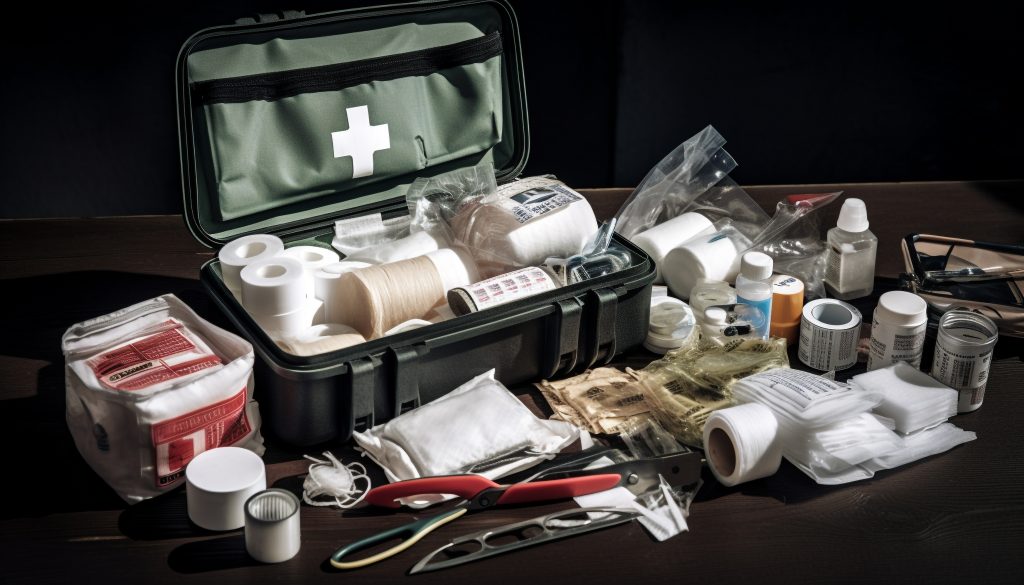
The contents of the HSE economy workplace first aid kit include basic supplies. It is for aiding in emergency situations. These kits are designed to be cost-effective and provide essential first-aid workplace items. These types of kits usually include:
- Adhesive plasters
- Sterile dressings
- Triangular bandages
- Safety pins
- Disposable gloves
- Adhesive tape
- First aid guidelines
Additional items to consider for low-risk workplaces
Adding additional items to your workplace can ensure that your workplace is well-prepared to handle a wider range of minor injuries. You can include the below items to ensure medical emergency at your workplace:
- Antiseptic Wipes
- Scissors
- Tweezers
- Eyewash
- Burn gel
- Cold pack
- Finger dressings
- First aid manual
First-aid kit needs in the workplace
First aid needs at the workplace mostly depend on the number of employees in the workplace. Here’s a general guideline for first aid kit items based on the number of workers:
| (1-10 persons Kit) | (11-20 person kit) | (21-50 person kit) |
| – First aid guidance leaflet – Adhesive plasters – Dressings – Bandages – Safety pins – Antiseptic wipes – Scissors – Burn gel | – First aid guidance leaflet – Extra sterling dressings – Gloves – More triangular bandages – Cold packs – Burn gel | – First aid guidance leaflet – Multiple enhanced first-aid kits – Dedicate first aid room – Trained first aider – All the equipment from (1-10 and 11-20 person kit) |
FAQs
What items should be included in an office first aid kit?
Common first aid kit items that should be included in an office are:
✅ Adhesive plasters
✅ Sterile gauze pads
✅ Disposable gloves
✅ Antiseptic wipes
✅ First aid manual
✅ Emergency contact manual
How is first aid provided in the workplace?
In the workplace, capable first-aiders use specific tools to help with incidents and emergencies. They follow basic steps and follow procedures to deliver emergency aid.
What are the first aid 10 points?
The first aid 10 points are about first aid and all the necessary steps, which include:
✅ Providing immediate care
✅ Preserving life by addressing threats
✅ Preventing further injuries
✅ Helping in promoting recovery
✅ Using basic care skills training
✅ Addressing the situation
How does first aid differ from first aid in the workplace?
In general, first aid assists someone injured or who becomes ill, no matter where they are. First aid in the workplace is the same concept but focuses on injuries that occur while employees work.
Conclusion
In summary, workplace first aid kits are critical for employee safety. Identifying the appropriate kit components requires knowledge of legal requirements.
Whether it’s the basic HSE Economy Workplace First Aid Kit or additional items for low-risk workplaces, having the proper supplies ensures that accidents and emergencies are responded to quickly and effectively. Eventually, it helps promote a safer work environment for everyone.




Level 3 Safeguarding Children and Vulnerable Adults
4.94.9Original price was: £119.00.£29.99Current price is: £29.99.
4499 Students

4 Hours

Level 5 Designated Safeguarding Lead (DSL)
4.94.9Original price was: £199.00.£49.99Current price is: £49.99.
4253 Students
7 Hours
-
3448 Students
17 Hours









0 responses on "What Should Be In A Workplace First Aid Kit? What Should You Consider?"